


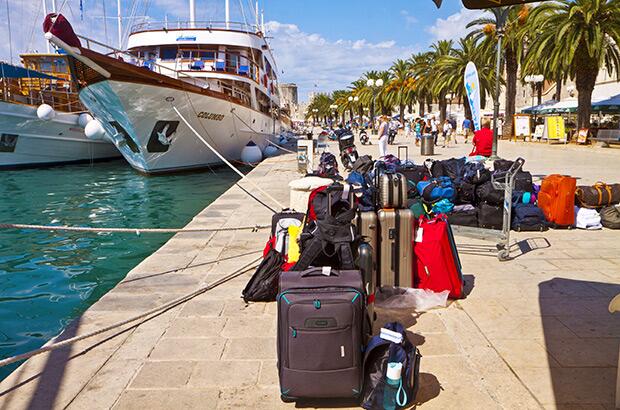
Whether San Juan is your embarkation point, mid-cruise port-of-call, or final
destination, you'll be among more than a million cruisers who visit La Isla
Encanta each year. The number continues to grow, bringing a new meaning to
Puerto Rico - "rich port".
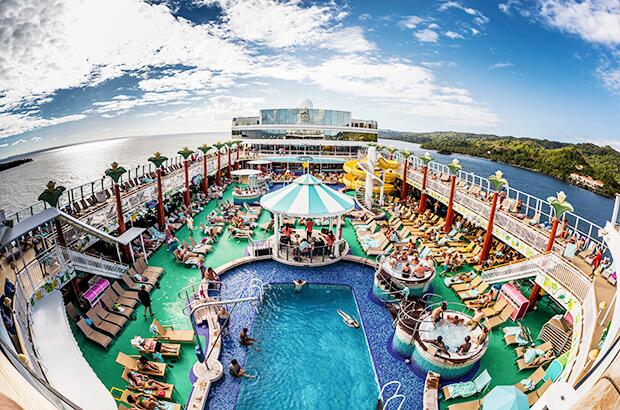
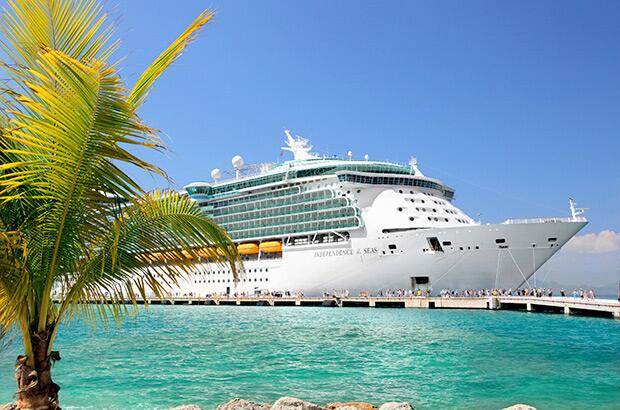
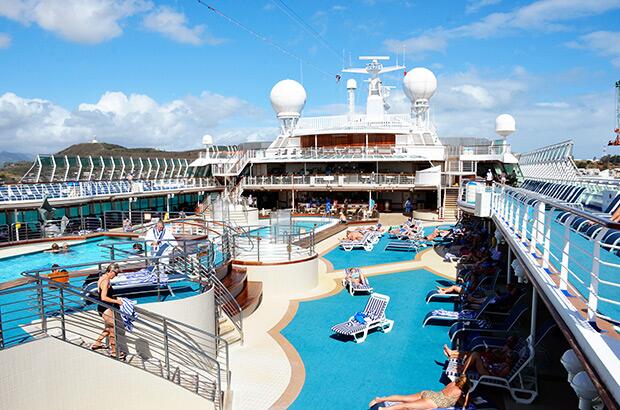
Once the headquarters of the Spanish Armada, San Juan is now the cruise ship
hub of the Caribbean, second only to Miami as a home base for cruise liners.
Twenty-five years ago, perhaps two small cruise ships called at San Juan in a
week. Today, it's common to see five or six ships-from neon-lit mega-liners
to Windjammer barquentines-at the piers in a single day.
Although St. Augustine, Florida (1513) is the oldest city in the continental
U.S., San Juan was founded in 1508 and ceded to the States after the Spanish
American War, making it the oldest city under the Stars and Stripes.
For me, Puerto Rico is a second home. I lived there for four years, and we
visit almost every year pre- or post-cruise. When I get that first hit of
hot, sultry air, my brain resets to "la vida borinqueña." We always plan to
fly in at least a day or two before a cruise so we can unwind slowly. Winter
cruisers from the frozen tundra should always consider flying in a day
early--not just because you'll have more time to explore, but as insurance
against weather delays and flight cancellations. But even better, San Juan is
a complete city to explore and celebrate-not just a tourist destination.
Hotels
Of the city's three main hotel areas, Isla Verde is closest to the airport.
There, on the upscale side, you'll find the Wyndham El San Juan and the Ritz
Carlton, both with casinos. If you're saving your tip money, the area also
has a Hampton Inn and an Embassy Suites.
A $10 cab ride from the airport takes you to Ashford Avenue and the Condado
area, with its string of beachfront hotels: the Condado Plaza, the Regency,
the Ramada Hotel Condado, and a bit further down, a Marriott and the Radisson
Ambassador Plaza. On your right, hidden inside the Hotel LaRada, is the
Scotch and Sirloin restaurant, a San Juan staple for over thirty years-I
first went there in 1970. Also on your right is the friendliest rental car
company in the city, Charlie's.
Forgot your toothbrush? Need a good book? A bottle of rum? Continue down
Ashford Avenue and turn right on de Diego Avenue. A couple of blocks down,
across from the Hotel Pierre, is Bell, Book and Candle, a well-stocked and
charmingly eclectic bookstore. Right next door is a Pueblo supermarket for
the rum and toothbrush.
For us, the real San Juan is the blue-cobblestoned Old City, or Pueblo Viejo.
From the airport, the taxi ride will cost about $16, maybe a dollar or two
more if you have lots of luggage. On the way, you will zoom past the Caribe
Hilton and the Radisson Normandie, both of which have recently undergone
extensive renovations. All beaches in Puerto Rico are public, so if beach and
swimming time are important, the Hilton's new beach/pool complex is worth a
look. The Normandie looks like a beached cruise ship; the new d�cor is just
short of garish art deco.
At last, the driver begins to wiggle through narrow streets not designed for
modern vehicles. There are three main hotels in the old city: the small,
reasonably priced Hotel Milano; the elegant El Convento (our personal
choice); and the new, glitzy Wyndham Old San Juan Hotel and Casino, just
across the street from the piers.
Sightseeing
Once you're in a hotel, you should find copies of two excellent magazines,
Que Pasa and Bienvenidos, in your room. If you are disembarking from a ship,
there are maps available at the exit to each pier, and tourist information is
also available at La Casita, the little pink building next to Pier One. Now
it's time to hit the streets. For us, the first stop of the morning is always
the gingerbread-festooned, blue-painted drug store on the Plaza de Armas,
surrounded by calles Fortaleza, San Francisco, San Jos� and Luna.
Why the drugstore? To buy a kite, a roll of string, and bottled water--total
cost less than $5. The grounds of El Morro castle may be the best place in
the world to fly a kite. Clutching your kite and water, walk down San
Francisco Street, take a right on Calle Cristo and visit the San Juan
Cathedral. Walk down the Cathedral's steps and take the street to the left of
the little square, reversing the steps of sailors safely home from the sea,
who came through the San Juan Gate and climbed the hill to give thanks for a
safe journey.
Come back through the gate and climb the small hill on your left to the
Plazuela de la Rogativa. Bear to the left and stroll Recinto Oeste to the
grounds of El Morro, formally known as El Castillo Felipe del Morro. Prowl
through the fortress, then fly that kite! When you've had enough, pass it
over to a muchacho looking longingly at the fun the kite flyers are having.
That $4 for kite and string may be the most rewarding money you've ever spent
just for the look on that child's face. Kids tend to be shy. Saying "es para
ti" explains that you want him to have the kite.
Next, wander around the public buildings, plazas, and museums-most of them
newly-built or smartened up for the 500th anniversary of San Juan-overlooking
the Atlantic. There are plenty of water fountains and public restrooms as
well as a few secret gardens for a welcome rest.
Walk south on Calle Cristo to San Sebastian, turn left, amble for a couple of
blocks, then slide a block south (right) to Calle Sol and turn left. Keep
walking until you reach the fort of San Cristobal (Saint Christopher). Tour
the fort if you want, then go down the hill to the Plaza Colon (Columbus),
where lots of pigeons routinely decorate Old Chris.
Tired feet? Grab the Norzagary Route trolley (it's free) and ride back up to
the top of the Cristo Street hill for more exploration. Both trolley
routes--the other is the Plaza de Armas Route--pass directly in front of the
piers if you prefer to take an orientation ride before setting off on foot.
If you're in need of refreshment, duck into El Convento-just across from the
cathedral-where food and drink are offered in a lush atrium. Because it's a
hotel, it's open when other places aren't-particularly important on Sundays.
If all you want is a place to sit and rest, there's a sitting area off to the
side of the restaurant.
Most shopping takes place on Cristo Street, home to upscale factory outlet
stores. Incursions to the side streets, particularly Fortaleza and San
Francisco, are worth the time. There are plenty of tatty, tacky stores
offering T-shirts at three for $10, but there are some gems as well. If you
need an unusual baby gift, hop into a shop whose windows feature exquisite
embroidery and ask to look at their cotitas--little garments made of fine
fabric with even finer embroidery.
Before leaving Calle Cristo, peek into the little chapel at the end of the
street and smile at the Parque de las Palomas (pigeon park) just to its
right. The legend is that the rum-fueled young men of San Juan used to race
their horses down the hill, and one of the fellows narrowly avoided falling into the sea when his
horse suddenly stopped. In gratitude for his life, his parents built the
capillo.
�Buen Provecho! - Let's Eat!
For comfortable American fare, El Patio de Sam, across from the San Jose
church on top of the hill, has been making burgers and club sandwiches since
the Nixon administration. If your goal is haute Puerto Rican, there's only
one choice: the venerable La Mallorquina on Calle Cruz. The waiters may be as
old as the building, but the restaurant is open to the air with lazy ceiling
fans and crisp table linens, reminding us how it used to be. I recommend the
chillo (red snapper) with tostones (garlic-fried green bananas).
La Barrachina, birthplace of the piña colada, prepares a dandy mofongo--fried
plaintains mixed with fried pork skins, olive oil and garlic (arguably an
acquired taste). My husband thinks it's a crime against nature. For me, it's
Puerto Rican comfort food.
The new restaurant scene in the old city is popping. Of course you can visit
your hotel's dining room or find a U.S.-type fast food place-we counted more
than 20 on our last walk-around. The Hard Rock Café� is just across the street
from the ship parking lot. An Internet caf� is almost next door. But why not
be adventurous? Best of the new restaurants, in our opinion, is the Parrot
Club on Fortaleza, which offers a fascinating combination of traditional
dishes and leading-edge nouvelle cuisine with a Borinquen flavor. They also
make the best mojito, a potentially lethal cocktail, on the island.
What would a trip to San Juan be without a stop at the Bacardi factory? Ask a
friendly person to direct you to the Cataño ferry at Pier 2. It's an easy
walk and only a 50 cent ferry fare. Once in Cataño, leave the ferry terminal,
turn right and walk about a block to find a taxi to the factory. Even though
I am still fascinated by the bottling line after countless trips to Bacardi,
these days we just zip into the company store and grab the rare rums that are
produced in such small volumes that they're almost impossible to find
anywhere else.
A note on rum: Remember that Puerto Rico is in the U.S. You can buy cases and
cases of rum at the supermarket (there's a Pueblo supermarket on Plaza de
Armas, very near the piers) and bring it home with no additional tax or duty.
Alternatively, you can buy rum or other vice-related products in the
well-stocked duty-free shops at the piers. Real Puerto Ricans favor Don Q,
and the true aficionados know about Ron Barrillito.
The best souvenirs are santos, hand-carved wooden saints. You'll find them
in the crafts galleries along Fortaleza and San Francisco. The
santeros--carvers--are often fifth- or sixth-generation saint-creators,
carrying on a particular style begun by an ancestor. I can't seem to leave
San Juan without a new saint tagging along for the ride.
With or without a santo to keep you company, Pueblo Viejo will wrap itself
and its history around you. Take time to smell the bougainvillea.