










Main menu:

Site search

Categories

May 2012
M T W T F S S
« Apr    
 123456
78910111213
14151617181920
21222324252627
28293031  

Tags

Blogroll

A Sea-side Resort At Sea

Written by: Kuki

At least in terms of “Caribbean cruising”, the main stream contemporary cruise lines have always felt their #1 competition came from sea-side all inclusive land based resorts.

The most definitive advantage that cruise ships continue to have over land based resorts is they float, and move people from port to port. Passengers on cruise ships travel, whereas resort guests do not.

Yet, particularly over the past decade, within the various cruise line’s new build programs, there has been a rather focused attempt in design work to incorporate dining and entertainment activities which historically have been more commonly found at land based resorts.

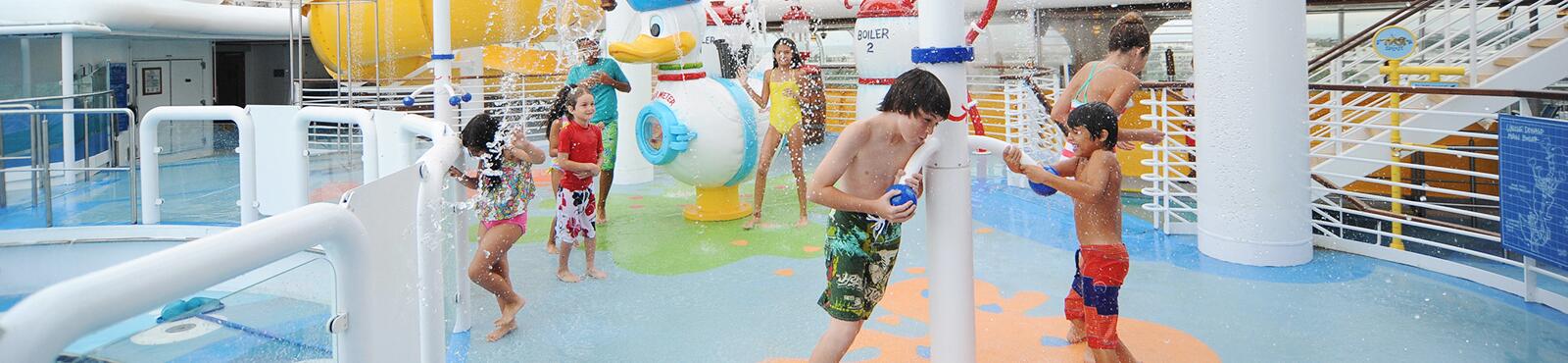
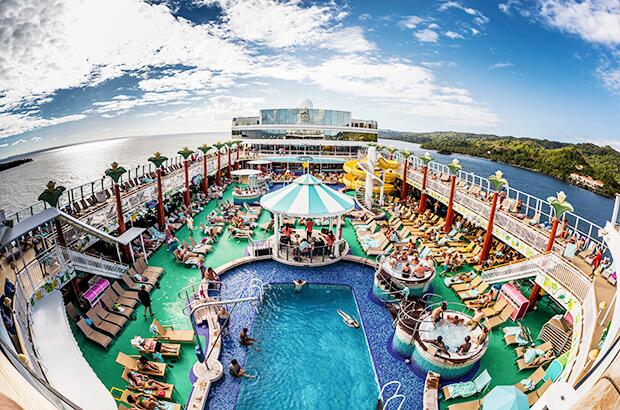
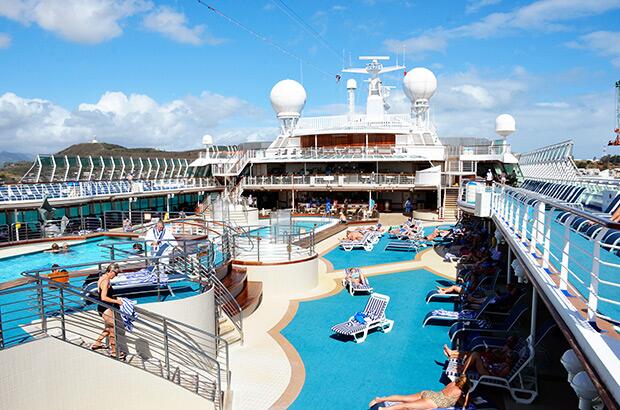
Where on ships, a water slide on the ship’s pool deck used to be about the most extreme activity on board, newer ships today have expanded from having one water slide to now having rather extensive water parks on deck. Expanding from there, flow-riders (surf machines), zip-lines, rope courses, aqua-theaters, and aqua ducks (Disney’s roller coaster like device) are being added to new ships as fast as someone can come up with the idea.

This added diversity by including these activities in the ship’s designs, has had some effect; resulting in more guests opting to choose to use the ship, as the destination, and passing on touring in the ship’s various ports of call. I surmise that those people are the ones whose personal experiences are more of the traditional land based resorts, as well as those who have perhaps cruised the Caribbean so many times they feel they have been over-exposed to the island’s tourism options.

Yet, in my mind, the one weakness of all the resort like amenities which have been added to all the new ships is that they are pretty much restricted to being located on the ship’s upper decks, on or above the Lido deck ( the resort/pool decks). The weakness in this type of design is it tends to remove one of the biggest attractions of cruise ships hold for me; one’s connection to the sea.

When all the activity amenities are located 12, 13 or more decks above the sea, one must go to a railing, just to get a glimpse of the waters you’re sailing. Once you’ve left those top decks, on many previous ships, once indoors they feel more like being in a mall than on a ship at sea.

Now, this past past week, when Norwegian Cruise Line revealed some of the details of their newest new build project, Project Breakaway, I’ve become more excited about an upcoming new ship than I have been for years.

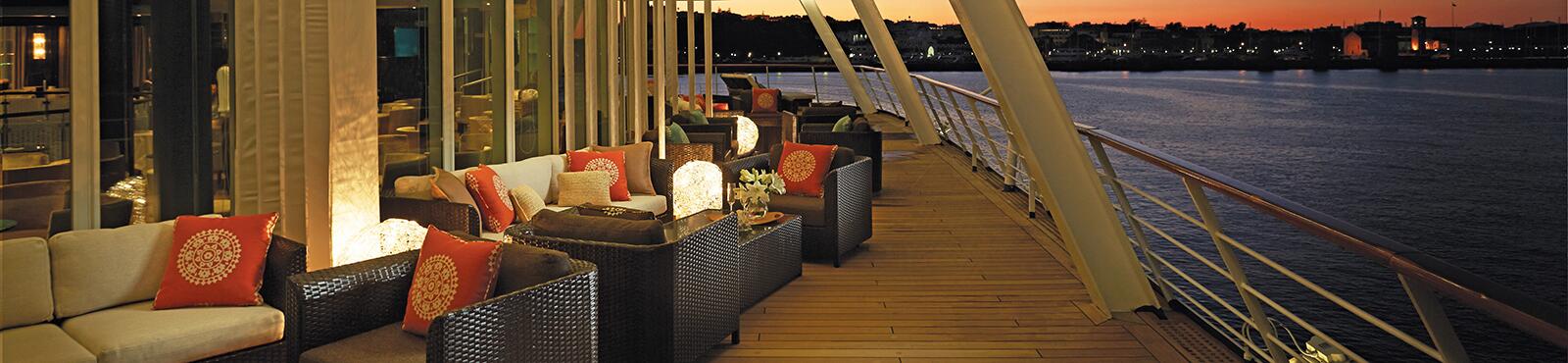
The reason – what Norwegian is calling “The Waterfront”. To be located on Promenade Deck, “the Waterfront” will be a length of open to the sea, restaurants and bars, with seating both inside (open to the outside) and out on deck.

Every great sea-side resort in the world has such an area; a length of shops, bars, and restaurants, sitting along the waterway or along the beach; where people can enjoy the views, the smells of the sea, and the action on the nearby beaches, from their seats while dining or enjoying their favorite libations.

And now, with Project Breakaway, this marvelous feature is going to be added to a cruise ship!

Just as at sea-side resorts, I believe this area is going to be buzzing with passenger activity and fun, and is going to set the pace for the heart of the ship. I can’t wait to sail the Breakaway, and experience this for myself; dining on great food, or enjoying some of my favorite fu fu drinks, while still enjoying the connection to the sea that only cruising on a ship at sea can give you.

You can read more specific details about the recent Norwegian announcement here:

http://www.cruisemates.com/articles/feature/norwegian-breakaway-waterfront-120314.cfm

- A View From the Kuki Side of Cruising -

Posted: March 20th, 2012 under Kuki.
Comments: 1

Time To End Sexism In The Cruise Industry

Written by: Kuki

You’ll have to forgive the sensationalistic headline. I don’t really believe that sexism is rampant throughout the cruise industry. But…I do think the value of the feminine side of cruising is extensively overblown.

 Cruise ships are commonly referred to as “she”, yet there is no good reason for doing so; other than that’s the way it has always been.

 One theory for referring to a ship as of female gender, when they are really not gender specific, is that doing so reflects the romance of the sea. Those who prescribe to that theory therefore have to believe that woman are more romantic than men.

I’m personally offended by that suggestion. In fact, if I were a woman, and therefore more sensitive, I’d probably be crying right now.

Truly it is men who can very easily lay claim to being the more romantic of the two genders. The earliest explorers in history left on their adventures because of their romantic visions. Many never returned. They met their demise because they realized the flowers they had discovered, and wanted to give to their wives, would never survive the trip home; or the jewelry they had often traded their crew’s lives for, in search of the perfect gift, their wives would likely want to return and exchange for a different color.

At one time a vote was held to decide if ships should still be referred to in the feminine gender. The only reason the vote resulted in the continuation of  the tradition was that it was held after women were granted the right to vote, rather than before.

As I worked on this week’s blog topic it occurred to me that it’s not just ships which are referred to as “she”; it’s everything inanimate. So, I’ve come to accept (given in to ) the fact that ship’s will continue to be referred to as she.

BUT… my question now, is why do ships (called she) have only Godmothers? And why are most of the godmothers, to this point, celebrities? It was recently announced that Priscilla Presley would be godmother to the new American Queen riverboat, and Mariah Carey is godmother to the recently inaugurated Disney Fantasy.  I’d really like to know… aside from talent, what do they have that I do not?

I believe that it high time for a ship to have a godfather! And I strongly believe that godfather should be me. You might ask yourself, why me?

 The answer is quite simple. I was the first one to think of it. It’s just like calling “shotgun” when you’re getting into a car with others.

I do have several other qualifications:

-For the 12 years I have been writing about cruises for Cruisemates 95% of my readers think I am a woman.

- I have as much experience with Champagne as any celebrity – even those who have graduated from the Betty Ford Clinic.

-Even when intoxicated I know which end of the ship is the bow.

-I’m very well known in my community as a philanthropic wasteland, and I’ve never been found guilty of any offence I’ve ever been charged with.

But, here is where I need your help. I need your help mounting a campaign not only to make certain a new ship has a godfather, but also to make certain that godfather is me.

I encourage all of you to write the CEO of all the cruise lines who may be in process of building new ships, and be overly suggestive recommending  me to be the godfather.

Any journalists, who happen to be reading this, and are attending the Miami Cruise Shipping Convention (which I didn’t bother attending), feel free to talk to the cruise line execs you see. If enough of you contact enough cruise line CEOs recommending me, together we might just find one inebriated enough to say “GREAT IDEA!”.

You can also become a representative laxative for my plan, assisting to move my movement forward by expressing your support on Twitter, using (hashtag) #Kuki4Godfather.

- A View From The Kuki Side of  Cruising -

Posted: March 13th, 2012 under Kuki.
Comments: 3

Things I Bet You Don’t Know About Cruising

Written by: Kuki

With literally hundreds of media outlets covering the cruise industry with almost microscopic coverage, there are very few secrets about the industry that are unexposed.

However, in this article I will present some facts about the industry that I have no doubt you’ll never see anywhere else.

For example, did you know that prior to a new ship entering service, the cruise line gathers the entire crew prior to the ship’s christening and hold a spelling bee? The top four finishers in the spelling bee then compete in an arm wrestling competition. And at the point, the winner is declared Captain. Their reasoning is the role of the Captain must be handled by someone who is both smart and strong. Actual maritime training is of minimal importance.

Prior to every sailing of every ship a lottery is held on board prior to boarding passengers. Every cabin number is thrown into a giant bin, and 4 cabin numbers are drawn. Those 4 cabins are then pre-determind to not receive their luggage. The Guest Relations department is the only department  to remain uninformed about which cabins have been chosen to  forgo receiving their luggage.  The purpose of this lottery is solely to provide entertainment for the staff and crew. Over the years they’ve found giving the crew something to laugh about, watching some of the ensuing mayhem, has proven to be an excellent morale builder.

When surveyed most cruise passengers say they cruise for the great food, or the excellent entertainment, or the fabulous destinations. But do you know the real reason? … Regardless of the demographic of any particular sailing there is more sex occurring on a cruise vacation, than any other type of vacation.

If during a specific sailing monitoring find the rates to be falling short in this activity, the crew are required to make up the short fall in frequency rates.

In 2014, a new Royal Caribbean ship will be outfitted with the first Liposuction Clinic at sea. However, the most innovative part of this treatment is guests will not be required to remain in the clinic during the procedure. They will be outfitted with specially designed portable units, which will allow them to enjoy dining at buffet, while being mechanically slimmed at the same time.

The “experts” believe that once this program is totally functional fleet wide, the rise in the rates of sexual activity on board will also skyrocket, and as a result, guest’s post cruise satisfaction survey results will skyrocket.

- A View From The Kuki Side of Cruising -

Posted: March 6th, 2012 under Kuki.
Comments: 2

Cruising Is Easier Than Ever

Written by: Kuki

From step 1- choosing a cruise, to booking a cruise, to preparing for your cruise, to shipboard activities, to port of call tours, though it may seem complicated, cruising is actually quite a bit simpler than it used to be.

At initial glance, with many more ships, and many more cabin categories on ships, and a seemingly cornucopia of events and activities onboard, one might argue that cruising has become more, not less, complicated.

However, I’d argue the access to the “information highway” has taken the guess work out of cruising experience. While the internet has been available to search for cruise information for some time, we have arrived at the point where there are almost unlimited of numbers of sites, blogs, etc. covering most every aspect of cruising. General questions are easily answered, but with our message boards, and Google searches, even the most specific questions (such as questions about a specific cabin on a specific ship) can normally be answered in a matter of minutes.

For a long while the cruise lines were slow to build and develop their own web prescence. While cruise related web sites such as CruiseMates learned to use the available technology quite quickly, the cruise lines themselves had fairly rudimentry web sites. Today the majority of the cruise lines have very sophistocated and user friendly web sites; with many cruise lines now embracing social media as well to communicate futher with passengers and potential passengers.

Pretty much every travel agent now also has a presence on the Internet.

Pretty much any question anyone could think of asking about a cruise ship, amenities, ports of call, transportation, and accommodations can be found in a matter of minutes.

The only danger-zone one has to watch for is when it comes to opinions. Opinions are like eyeballs; everyone seems to have at least  two. But I do believe we are all bright enough to watch for the trappings of overly positive, as well as overly negative, opinions.

While the impact of advancing technology on the industry is undeniable, the non-technological areas of cruising have also been simplified.

One major area of impact has been a change to dress codes. The days of seeing ships filled with gentelman in tuxedos, and ladies in long fancy decorative gowns is pretty much a distance memory. You may still see a few nostalgic passengers “dressed to the nines”,  but generally cruise wear today is much simpler, and more about personal choice.

A number of cruise lines still designate a night or two as “Formal”. However it’s much more likely you’ll see men in simple suits, or even sports jackets and slacks, and ladies wearing what might be called cocktail dresses.

With the changes to dress codes, combined with weight restrictions on luggage implemented by the airlines, people are much more likely to think of clean and comfortable, and more minimalistic when preparing  their cruise wardrobe. No need to stress anymore about what you “should” be wearing.

Even dining on board has been simplified (in what some might see as a more complicated manner).  The majority of cruise lines continue to offer a set dining time, with a set table seating.  However, most have also added alternate choices for venues, as well as the ability to dine at any time of your choosing.

At first glance this may seem more complicated, but in fact, one has the ability to choose the dining style you feel best suited for, before you cruise. You can book the alternate restaurant choices in advance, and make reservations, or you can choose to simply show at a time of your choosing,  which might involve a short wait until a suitable table is available (which is no different than going to a restaurant on land, without an advance reservation.

While many people believe it’s simpler to book their cruises directly with the cruise line, to cut out the middle-man, the fact is that working with a professional, qualified, and experienced cruise sales specialist is the best and simplest way to book.  The services of the cruise specialist come at no extra charge to the purchaser, as their commissions are paid by the cruise line, not the purchaser. And once you are working with that cruise specialist, they assume the responsibility of being your representative in any and all dealings with the cruise line. They simplify the entire process by removing any of the stress in the booking process from your mind.

Perhaps the only area that can still remain complicated is budgeting. Budgeting is a very personal issue, and that is why it remains complicated. Several weeks ago I wrote a blog, whose topic was budgeting. Cruise Budgetting.

That, and many other easily accessed articles on the same topic, simplify even the budgeting issues.

In today’s cruise world, with a bit of advanced research, and in the hands of a travel agent specialist, you really can relax, and enjoy the positive anticipation of your cruise experience.

And, if along the way you some questions pop up, simple jump on our message boards, and in no time at all you’ll get an answer.

http://www.cruisemates.com/forum/

- A View From The Kuki Side Of Cruisiing -

Posted: February 28th, 2012 under Kuki.
Comments: 1

Theme Cruises That Might Be Fun

Written by: Kuki

Theme cruises have become a significant part of the cruise industry. There are all variety of music cruises; from rock and roll legends cruises, to smooth jazz and blues cruises, to even popular contemporary bands performing on full ship charters to the delight of their fans.

There are culinary themed cruises, featuring up close and personal experiences with some of the world’s more renowned chefs. Wine cruises with lectures and seminars by world class somelliers. There’s also motorcycle cruises, where the guests are encouraged to bring their bikes with them for use in the ports of call. And there’s even Nudist cruises, for those who enjoy wearing only the bare necessisties. Even politics gets into the picture with theme cruises by the right-leaning National Review.

But, I think there’s still some space out there remaining to be filled by some enterprising entrepeneur that could really be fun.

For example:

- Foot Festishists Theme Cruise -  the days could be filled with lectures and seminars by podiatrists; the nights by shoe fashion shows. Everyone would be instructed to toe the line, but they’d have the opportunity to put their best foot forward,   and no doubt a few onboard would step in it.

-Theme Cruise for People Who Think They Look Like A Famous Person – I’ve actually been stopped in an airport and asked if I was Phil Jackson (the famous basketball coach). No doubt there are thousands of people who think they look like someone famous, but really have no resemblance whatsoever to their supposed look-a-like. The days could be filled with game shows of Who The Heck Is That?!

- Pessimests Theme cruise – This one would be so easy to pull off, with daily lectures by everyone who is predicting a date for the end of the world.  Throw in some pool-side games of people guessing what the next bad thing to happen to them will be, and some group discussions of  why people think they are going to die, and you’ve got the potential for a real winner in the category.

You might want to double up on this one and mix the pessimists with hypochondriacs.

- Theme cuise for those with Imaginary Friends – here’s an easy one to make a nice profit at; each passenger would pay full fare for them and their imaginary friend (double occupancy cabins you know). Each night at dinner you’d have everyone at their table introduce their friend, and tell the stories of how they met, and watch for the easily flowing “kuki” conversations.

- Victoria’s Secret Theme Cruises – Easy reasoning on this one. I’m a man!

Give me a shipload of models in garments from Victoria Secret, and I could quit digging through garbage cans for their catalogues.

No doubt I have just scratched the surface of ideas in this realm. Feel free to expand with your ideas for the next big thing in theme cruises.

- A View From The Kuki Side of Cruising -

Posted: February 21st, 2012 under Kuki.
Comments: 1

Cruising Is Intoxicating

Written by: Kuki

While every type of business depends on repeat business, I believe there are few with such a loyal customer base as cruising. On virtually every sailing of every ship, there are hundreds and hundreds of people who’ve cruised before; at least several times; often many times.’

Fact is, it is very infrequent passengers disembark a ship feeling as though they didn’t get great value for the money they spent. Aside from the feeling of good value,  there is an intoxicating factor.

How often does one step into a hotel room, and feel they are “home”? Oddly perhaps, it rarely takes long for a cruise ship passenger to enter their cabin, and not have that feeling of “being home” swell. The feeling is not easily defined, nor is it easily explained in words, or scientifically proven. It’s at least partially explainable because when you arrive, and unpack your belongings, your making it0″ your space”, because, though you are traveling, you know this is your home base for the duration of the cruise.

Cruises are made of a number of “moments”.  And so often many of those moments become life long memories which bring a smile to your face each time they cross your mind.

The moment might be a dinner service that goes so smoothly you think you’re dining in your favorite restaurant; or a moment during the meal where you share a taste of a delicious plate of food with your loved one, while sharing a warm, loving and knowing smile. The moment may be during a comedy show, where, while as you are laughing hysterically, you glance over to see your friend, or mate enjoying the time as much as you are.

When you are relaxing on your private balcony, or standing out on an open deck, stairing out for miles into a calm and endless sea, on a star filled night,  suddenly it dawns on you… that is the feeling everyone could feel if there could ever be world peace.

These moments and memories can be different for everyone. It can be everything from your falling asleep during a Broadway-style show,  to zip-lining above a rain forest in a port of call, to your team wining a trivia contest on board, to the wonderful night’s sleep you got as the ship rocked back and forth as it cut through the water.

While cruising may not be right for everyone. The majority of people who try it, do have a desire to do it again.  And it’s most likely the urge will come later, when the memories of those moments pop into your head, and bring a smile to your face; and you again feel intoxicated by the joy of it.

- A View From The Kuki Side of Cruising -

Posted: February 14th, 2012 under Kuki.
Comments: 2

Interporting? How Convenient?

Written by: Paul Motter

Sometimes the timing of certain decisions in the cruise industry really surprises me. Just as we are beginning to recover from the Concordia accident, which we learned happened largely as a result of a practice called interporting, we hear new announcements from the cruise industry that certain lines plan to increase the number of cruises where interporting takes place.

What is interporting? It is the practice of taking on new passengers in various ports of call along the cruise itinerary. What used to be a singular beginning and ending for all of the passengers on a given cruise itinerary will now be more like a train or hotel where the faces change every couple of days.

For example, a cruise that begins in Barcelona and stops in Marseille and Rome before it is returns to Barcelona will now pick up passengers in Marseille and Rome and keep those passengers onboard until the ship returns to the same port.

This is a very new concept for the mainstream American cruise fleet, although it has been pretty common in Europe for awhile now. Still, I don’t like the idea personally. It is also interesting that the two lines now announcing it are not in the Carnival Corp. family.

Norwegian cruise lines just announced it will start interporting on Norwegian Epic in the 2013 summer season. You will be able to board the ship and Barcelona, Marseille or Rome and stay onboard for seven days. Each passenger will receive a lifeboat drill within a few hours of arrival and before the ship sets sail, according to the new worldwide CLIA policy, which means each passenger will attend one drill and endure the distraction while other passengers have their own drills days later.

Royal Caribbean also announced interporting on its 2,100-passenger Brilliance of the Seas. The ship will embark passengers in Puerto Rico on a series of seven-night Southern Caribbean cruises during the 2012-13 winter season, and also embark and disembark others in Guadeloupe on day four of the cruise. The idea here is to have American and Canadian passengers sailing round trip San Juan and South American cruisers sailing roundtrip from the island of Guadeloupe a few days later.

Actually, I don’t understand exactly why South Americans should prefer Guadeloupe over San Juan since the distance from Caracas to Puerto Rico is about the same as it is to Guadeloupe. Plus, the native language in Puerto Rico is Spanish just as it is in Venezuela, while Guadeloupe is a French-speaking island. They will still have to go through U.S. immigration when the ship hits San Juan, as far as I know, anyway.

So, now we have more ships doing interporting as a regular practice. This means that when you board Brilliance of the Seas in Puerto Rico it will already be inhabited by hundreds of South Americans already half-way though their cruise. Restaurants and spa appointments will already be booked by those onboard before you arrive.

In addition, the South Americans will experience a new influx of passengers in Puerto Rico in the middle of their cruise. And in their case the “English-speaking people” will have already booked up the first half of their cruise with restaurant and spa reservations.

Interporting breaks up the continuity of a cruise. Those cruise rituals we cruisers have come to know and love; the welcome aboard party where new passengers meet the captain and chef, and the farewell celebration towards the end of the cruise will most likely disappear. Otherwise they will become all but meaningless. Embarkation and disembarkation as a procedure will go more quickly with fewer people, but it could also lead to complications for visitors not disembarking in a given port.

I find it interesting that CLIA would make the announcement that muster drill is now mandatory before a ship sets sail to address a problem specifically created by the practice of interporting, only to see cruise lines announce within a few days an increase in the number of cruises where interporting takes place. It seems more logical that the Concordia accident would have compelled the cruise industry to end to the practice.

That’s just the way it is sometimes, but wouldn’t have made sense to at least let the Concordia news die down a little bit before announcing the increase in interporting? I am guessing that the cruise lines have wanted to do this for quite awhile now, but held back due to complications around scheduling muster drills. But now that CLIA has gotten all cruise lines to agree to hold all muster drills the same day they see it as a green light to use interporting as much as they want.

So, who is the winner in any of this? The cruise lines will make more money and it will be more convenient for some people to embark closer to home, but I think it will make the cruise experience far less personal and more like a floating hotel. The biggest losers will definitely be the crewmembers who now have to spend far more time loading and unloading passengers and hosting three life boat drills per cruise.

Posted: February 14th, 2012 under Paul Motter.
Tags: , , , ,
Comments: 7

A Growing Trend In Caribbean Cruising?

Written by: Kuki

Winter comes and cruisers minds turn to escaping to the warmth of the Caribbean. That statement has been true for many years, and continues to be true.

The cruise lines continue to bring the majority of their fleets to sail Caribbean itineraries during the winter months, and they continue to sail full, even with the growing numbers of ships in those fleets.

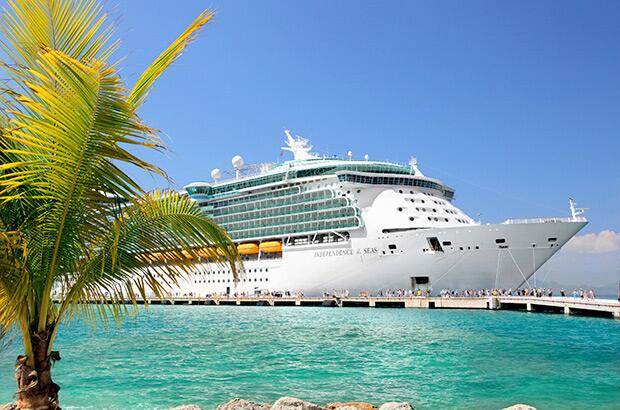
Almost every day multiple ships are tying up at piers or anchoring off of small islands throughout the Caribbean, delivering thousands of people to the area. However, there seems to be a growing tide; cruise ship passengers staying onboard during ports of call rather than touring the islands and booking other excursions.

It used to be, if you happened to stay on board the ship while in port, you were pretty much the only ones on board other than crew who were working.

These days it seems many more people are no longer cruising to visit the islands. The growing primary intent seems to be to enjoy the warmth of the Caribbean, but not the islands. A growing preference to simply enjoy it while staying on the ship. In addition there are more people who may disembark the ship in port for only a couple of hours; long enough to do a bit of shopping, and head back to the ship before lunch.

There is most likely a variety of reasons these people are deciding to stay on the ship , or quickly return to  the ship.

- One reason may be the fact these often small islands are being flooded with tourists. With multiple ships in port, many days the ships are dropping 10,000 -12,000 passengers onto an island where the infrastucture is incapapble of handling the crowds well.

- There is a segment of cruisers who cruise only in the Caribbean; some of this is due to the move to homeport cruising and their desire to avoid flying anywhere.

After multiple visits to the same islands, these people take a “been there, done that” attitude, and choose to remain on the ship.

- Another segment feel that since they have already pre–paid their food costs in their cruise fare, and therefore, even if they leave the ship for a short time, they should return to the ship by meal time, rather than pay extra for food in the islands.

- Over recent years the cruise line’s newer ship have added amenities and activities which make them more like land based resorts; adding water parks, flow riders, even ziplines, and rope courses. Making many of the activities available in the island port redundant in the minds of many cruisers.

The type of people who enjoy resort vacations, and land based all-inclusives, are very likely never to leave the property. That same attitude is becoming more common place on cruise ships.

There’s also the segment of cruisers who would prefer the ship  simply sailed out, and spent the entire length of the cruise at sea; enjoying lanquid days floating about. With the excpetion of “special” short voyages to introduce a ship (normally tied to some sort of charity event) cruises to nowhere are not allowed under American law. This results in those people who would prefer cruises to nowhere making them that by ignoring the fact the ship is docked or at anchor at an island.

It is more likely that it’s those people who are repeat cruisers who are choosing to stay on board more often. I think it’s likely first time cruisers will spend their days off of the ship.

No doubt there’s other reasons that this trend is growing, which I haven’t thought of, which our readers can add.

Are you one of the group more likely to stay on your ship while it’s in port, or will you make certain you are off of the ship, to experience as much of every island that you can?

- A View From The Kuki Side of Cruising -

Posted: February 7th, 2012 under Kuki.
Comments: 5

Should Cruise Pricing Be Transparent?

Written by: Kuki

On Jan. 26, 2012, in the United States, it became law that in the interests of public transparency, airlines publish pricing which includes all taxes.

This law allows the people searching for airfares to see the total costs, rather than the airlines promoting seemingly low  fares,only for the consumer  to find the actual total cost to be considerably higher.

From the consumers point of view, I imagine most of us would like to see cruise pricing handled in the same way.

The situation with the manner in which cruise pricing is presented and promoted has improved in recent years.

 In the past, cruise pricing was more complex.  When you saw an advertised cruise price, and it interested you, once you called to book, you’d find the advertised price did not include port charges or government taxes ,then referred to as non-commissionable costs. The term non-commissionable costs was really just important to travel agents, as it meant they weren’t being paid a commission of that portion of the total cruise fare their customers were paying.

Customers thought the “port charges” portion of the fare referred to the costs cruise lines were being charged by the ports of call they were visiting, but to the cruise lines it became a vessel to dump all sorts of costs of their operations into, to eliminate paying their travel agent partners commissions on those costs.

At this time, however, most cruise lines are publishing and advertising fares which include the port charges. Most also require the travel agents they work with to advertise their fares the same way. But, they also state “government fees and taxes are additional”. Thus the advertised price you might see is still not truly your final cost as a consumer.

Now that the U.S. airlines have been forced to offer prices inclusive of taxes, one might think the cruise lines should follow suit. As I stated, as consumers of the cruise product we’d all like to see or hear the “bottom line” when asking for a quote on a cruise.

As this new law took effect, a member of the House of Representatives is already presenting legislation to repeal the law, and several airlines have filed suit in Federal Court on constitutional grounds.

I have no thoughts on the constitutionality of the law, but frankly I believe there is some seemingly reasonable concern to their objections to the law.

Their argument is this law requires the taxes to be hidden in the costs of the ticket, and those taxes could be increased by the government, without the customer knowing the increase in the fares was due to the tax increase. At initial glance, that does seem like a reasonable objection.

There seems to be a simple solution.  Why can’t they advertise the total price, adding… this fare includes taxes of ”$X” ? As could the cruise lines simply reverse their description; rather than saying the price does not include government fees and taxes, they could say… this fare includes government fees and taxes of “$X”.

However, like most things in life, nothing is that simple.

In pretty much every other thing consumers purchase government fees and taxes are not included in the advertised price.  When shopping in department stores the price tags do not include taxes; when eating in a restaurant the menu pricing does not include taxes; when purchasing an automobile the price tag does not include taxes; when booking a hotel room the price does not include taxes.

Basically the full price of your purchase does not appear until you are paying, or about to decide to pay. Why do we expect the airline (and possibly cruise) business to be different?

Simple – because it would be more convenient.

As you can see, the issue is complex enough that I can have a pretty good arguement with myself. What do you think?

- A View From The Kuki Side of Cruising -

Posted: January 31st, 2012 under Kuki.
Comments: 2

Lawyers Vow to Defend Costa Victims

Written by: Paul Motter

Two Manhattan-based law firms vowing to defend all of the victims of the Concordia disaster may face hurdles in bringing a class action lawsuit to the U. S. court system. The two firms are (1) Proner and Proner, and (2) Napoli Bern Ripka Shkolnik LLP. Michael Bern filed a lawsuit for six passengers against Carnival Corporation, parent company of ship owner Costa Cruises, in a Miami court demanding $460 million in compensation on Saturday.

But these vociferous lawyers may be facing a Herculean battle if previous cruise line adjudication is any indication. To help clarify the situation, I spoke to Jerry Hamilton of Hamilton, Miller & Birthisel, a law firm specializing in maritime law in Florida.

The main challenge to these New York-based lawyers is the cruise ticket, which contains very specific limitations on the right to sue a cruise line. Boarding a cruise ship requires far more than a token to show you paid the fare. Your cruise voucher is actually a finely crafted legal contract, filled with some surprising and even arcane restrictions in fine print which many cruise plaintiff attorneys (those who sue cruise lines) feel are egregiously one-sided in favor of the cruise line. Unfortunately, most passengers never even read them unless something goes wrong.

The first hurdle these law firms face is the venue. The Costa cruise ticket states that Genoa, Italy, must be the venue for any lawsuit for any cruise originating from any port other than the United States, even though Costa is one of many cruise lines belonging to parent company Carnival Corp., which is headquartered in Miami.

Plaintiff attorney Mitchell Proner, on a public interview by the Miami ABC affiliate television station, said he hope to get a change of venue because parent company Carnival Corp. is based in Miami. Citing a legal concept called Forum Non Conveniens he implied that a company that earned $14.5 billion, sitting in the heart of Miami, should be able to be sued in Miami.

On the other hand, Miami maritime lawyer Hamilton pointed out to me that Forum Non Conveniens is decided based upon several distinct variables; (1) where the victims are located, (2) where the incident occurred and (3) where the evidence is located. He said that Carnival Corp. could be sued in Miami, but that it seems unlikely to be allowed in this case because Carnival is the holding company, not the company who owned the ship.

The two New York law firms hope to form a class action lawsuit for as many Concordia victims as they can find; and Proner stated he has people from Italy and every place from Peru to Shanghai. However, according to Hamilton Forum Non Conveniens would apply to American victims. And when it comes to where the incident happened and the location of the evidence; Italy is the only logical answer.

Other Legal Arguments
Perhaps even more pertinent to this case is a famous (in cruise circles, anyway) 1991 U.S. Supreme Court case; Shute vs. Carnival Cruise Lines. That decision said venue restriction in the cruise contract is fully legal. In fact, many things regarding the cruise contract were decided in that case.

Proner also hopes to pierce the cruise contract by bringing up the fine print issue. He said in the same interview that no one reads the fine print on a cruise ticket and no one should be expected to read it. I would likely agree with him on that, but once again; Shute vs. Carnival Cruise Lines. That case decided the cruise contract was not only printed in legible type, but that the language is clear and concise enough to be understood by the party signing the agreement.

Note; you can read the Costa Cruises cruise ticket contract here.

http://www.costacruise.com/B2C/USA/Support/contract/contract.htm

The next challenge to the idea of a class action law suit to represent all of the Concordia victims is the definition of a class action lawsuit. Proner said he hopes to get about 125,000 Euros for emotional suffering for each victim, three to four times that amount for those who were physically injured and millions for the families of those who died or are missing.

Once again Hamilton points out that by definition a class action lawsuit must represent a class of victims that suffered fundamentally the same injury, so it does not make sense to have emotional, physical and other sufferers in the same class action suit. Most likely the suit could not be brought as a class action.

Proner also said that if he could not establish a class action suit he would take on individual cases. “If you go there,” said Hamilton, “you come right back to the passenger ticket issue; meaning venue and other restrictions.” On the other hand, Hamilton did suggest that if a victim were to call Costa, he surmises the line would be more than happy to discuss the issue. 80% to 90% of all lawsuits, including maritime, end up being settled.

In the end Hamilton pointed out something that made a lot of sense. There is no greater concentration of maritime lawyers anywhere than in Miami, yet not one Miami lawyer is trying to do what these New York lawyers are trying to do. Of the better known Miami lawyers I am personally familiar with, only one has sued Costa, and he did it in Genoa.
“Furthermore, Italy has plenty of lawyers, some of which have also sued Costa,” said Hamilton.

Other Cruise Ticket Restrictions
While the conditions of the cruise ticket are arguably one-sided, there is nothing inherently illegal about them. But surprisingly many aspects of cruise tickets are based not on U.S. law, but rather upon international treaties and maritime law comprising a system of legal jurisprudence outside of U.S. law.

For example, there is the Athens Agreement, an old (1974) and often amended international treaty which limits the liability of a cruise line in cases of injury and loss of property (combined) to about $70,000 per person.

Then there is the “Death on the High Seas Act” which limits liability for loss of life to the amount a wage earner would have earned in his lifetime, and that is only available to immediate family. The DOHSA came into play with the BP Gulf oil rig disaster, and interestingly it is a United States law, and Hamilton told me it is quite possible that Italian law may be more beneficial to the families of those who died.

Bottom Line – Cruise Contracts
Now, to be clear, Carnival Cruise Lines is separate from Carnival Corp. Carnival Cruise Lines is just one of many separate and distinct cruise lines, separately incorporated, that are in the Carnival Corp. holding company, which also includes Princess, Holland America, Seabourn, and Cunard. The Concordia event involved Costa Cruise Lines, incorporated and sailing in Europe with mostly European passengers.
The bottom line is that these are very complicated legal matters and I am not an expert. The law is full of surprises and loopholes. If any experts out there care to weigh in there is a comment section below. If you have any other cruise questions email me at editor@cruisemates.com.

Posted: January 29th, 2012 under Paul Motter.
Comments: 1