


Adventure of the Seas

49 Reviews

Ranked #10 Royal Caribbean fleet
Ranked #50 among all ships
Regions: Caribbean
Prices Start at: $194/day

Adventure of the Seas Overview

Tonnage: 138,000

Passengers: 3,838

Crew: 1,185

Registry: Bahamas

The third Voyager-class ship arrived 2004. Great environment with large indoor promenade, ice skating and sports

Best For People Who Want

A bigger-than-life cruise experience with nearly unlimited activities; the feeling of being in a city-at-sea; family members of many ages to have a grand time; non-stop nightlife

Should Be Avoided By People Who Prefer

A small ship with lots of quiet; large inside/outside standard cabins; single, open seating or intimate dining; a close-to-the-sea cruise.

Onboard Experience

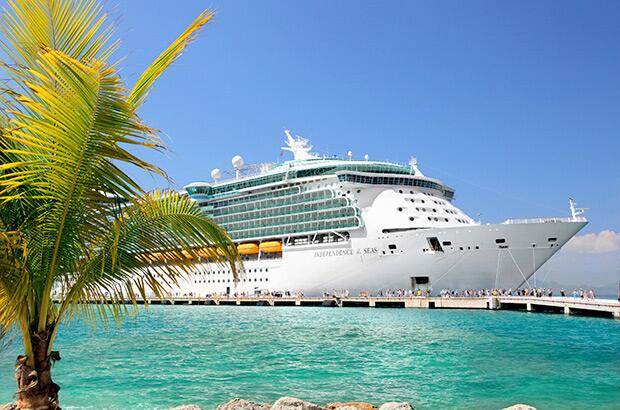
Adventure of the Seas was the third in the series of Voyager-class vessels (Voyager, Explorer, Adventure and Navigator), entering service in 2001. Adventure is a nearly identical to her sisters, also featuring an ice skating rink, rock-climbing wall, in-line skating track, horizontal atrium, and inside-facing cabins with a promenade view. One thing is for sure: the 3,114-passenger ship appeals to people of all ages but is especially suited for the younger and more active set.

Oldsters can still enjoy people-watching but its the youngsters who really benefit from the 40-foot-high rock-climbing wall, ice-skating, miniature golf, volleyball and basketball and rollerblading on the sports deck.

Deck three features "Studio B," an incongruously named ice rink for recreational skating as well as for Ice Capades-type shows. The ship offers one of the biggest casinos at sea, a tiny movie theater, a library, and an internet cafe.

There are a full three miles of public corridors, but the hallways are occasionally "jiggered" so you don't get a sense of the full distance, plus excellent signage precludes anyone getting too grievously lost. There is a severe shortage of elevators, with but two banks of four to service 3400 people over 14 decks. Wait times can be excruciating.

A simple "let's go see the ship!" comment on day one leads you out the door, and by the time you return to your cabin you will feel like Marco Polo. The 500-foot-long, four-deck-high Royal Promenade, all too evocative of an onshore mall, is like a real street, with a cherry-red British Morgan car parked outside the faux English Pub. The promenades are lined with cafes, a 24-hour eatery for pizza, pastries and sandwiches. Shops, including souvenirs, liquor and cigarettes, display their wares outside on days at sea.

There is a $4.25-per-scoop Ben & Jerry's. Pay-per-view in-cabin movies are $11.95, and there's a $3.95 per person service charge to Johnny Rockets (although the burgers are free, and worth every cent). There's a $20 surcharge for the small alternative restaurants Portofino and Chops which serve great a la minute meals but are a little overly crowded.

Decor

Clean, simple and tasteful, featuring a lot of Art Nouveau influence, seems just right for a ship this size. The atrium boasts a beautiful fiber optic sculpture rising several stories. The ship's well-placed art is surprisingly sophisticated. Particularly notable are the Georgian-style dining rooms, a stunning tucked-away lounge for smokers called the Connoisseur Cigar Club (to which you'll have to ask directions); and the elegant Champagne Bar, with curvaceous champagne-colored leather banquettes.

Public Rooms

The breathtaking Royal Promenade -- four decks high, longer than a football field, wider than three lanes of traffic -- has no windows, but is always dazzlingly illuminated, as only befits a venue for Mardi Gras-style parades complete with stilt walkers, a swaying inflatable dancer, streamers and confetti.

The enormous Casino Royale, through which passengers must pass to get to the main show lounge, is gilded to within an inch of its life, with nearly 300 slots and tables for blackjack, craps, roulette and Caribbean Stud Poker. The disco pulses into the wee hours. Floor-to-ceiling seawater tanks teeming with Day-Glo tropical fish flank the Aquarium Bar. The well-stocked library, which feels like an urban bookshop, provides seating along its glass wall for an overview of the Royal Promenade. The Viking Crown Lounge is perched 14 decks above the ocean. You can get married in port in the ship's Wedding Chapel, bringing up to 60 of your closest friends and families.

The gorgeous La Scala Theater, a state-of-the-art 1,350-seat show lounge, features such decorative elements as a Murano glass chandelier and a jewel-bedecked velvet stage curtain.

That ice rink you hear so much about is a two decks below the atrium and right in the middle of the ship, which means some fancy footwork is sometimes required to get to other public areas. In fact, the great and spacious interior of the ship is almost completely surrounded by private cabins, so to get any look at the ocean at all you'll have to head for the cluster of lounges on the upper decks or outside on the decks themselves.

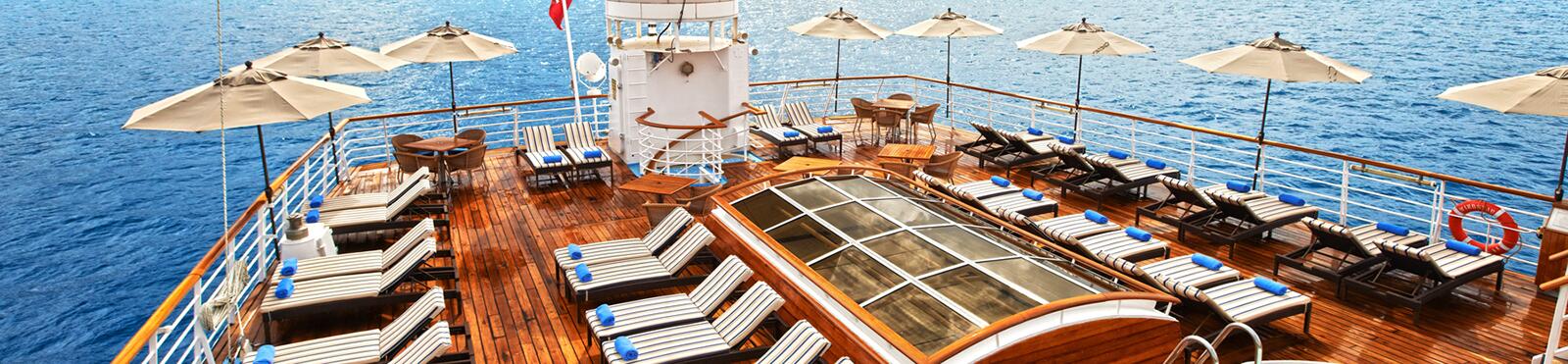
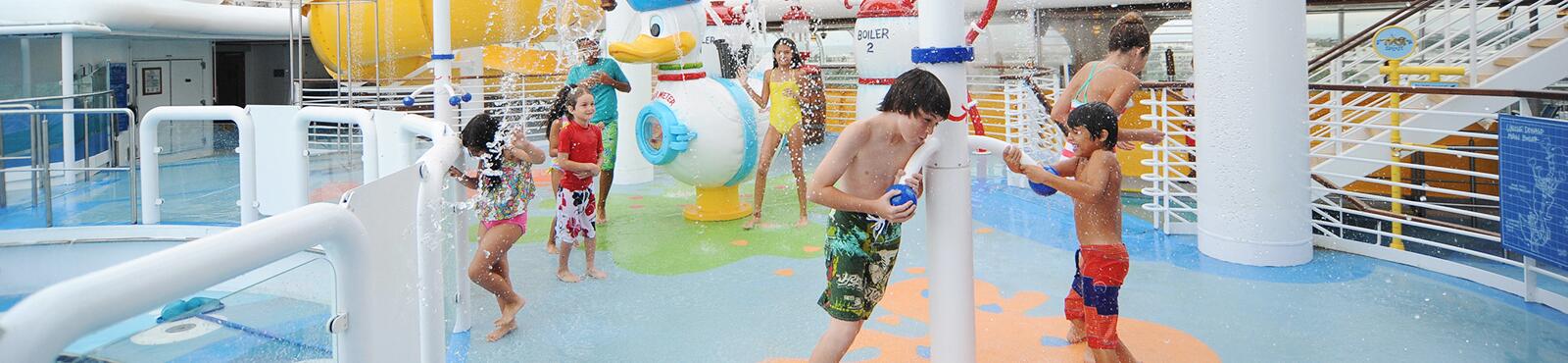
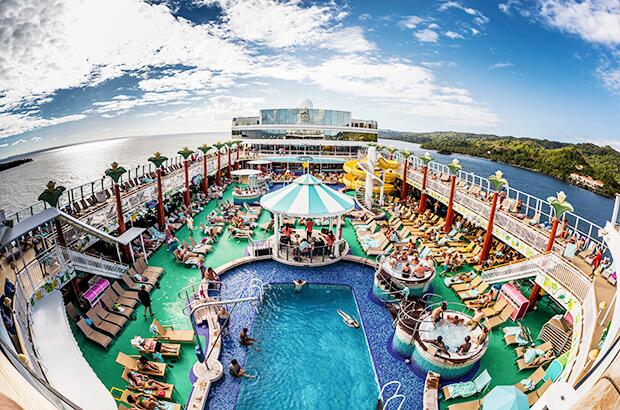
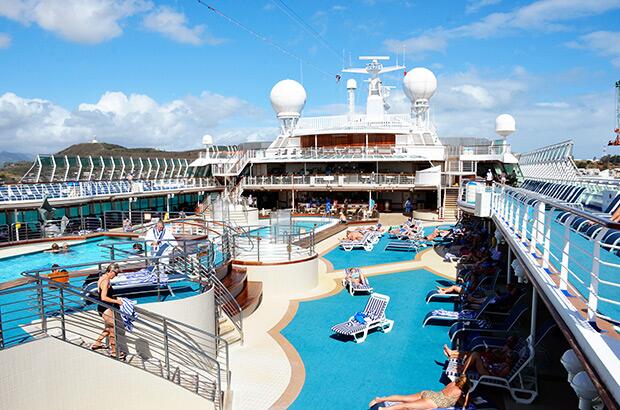
Amply decked out with recliners, the pool areas bustle with activity and also are the staging area for fashion shows and planned games. The real action takes place on the sports deck, where fitness fans work up a sweat playing ping-pong, basketball or rock-climbing. Families flock to the open-air 9-hole miniature golf course. There is inline skating on a well-padded track.

The best spots for being alone with a book during days at sea are the sea view Seven of Hearts card room and Cloud Nine Lounge on Deck 14. Serious misanthropes can retreat all the way up the curving stairway to Deck 15's Skylight Chapel, where no one ever ventures, and where no music is piped in.

Cuisine

Mouthwatering descriptions on the menus notwithstanding, you probably won't hear people raving about the food. Particularly annoying are misleading descriptions of food items, a notable one being a dessert called "chocolate fondue" which evokes a plate of fruit and marshmallows for dipping into a bowl of hot, molten cocoa-laden chocolate. What arrives is a refrigerated bowl of congealed white pudding with a few berries stuck to the bottom. The immediate response is, "Huh? What is this?" It turns out the description says "white chocolate" and as for the word "fondue," - well, it just isn't one.

These ships have changed their dining room menus, limiting the number of courses. While most ships list appetizers, soups, salads and entrees separately, there are now but two categories, starters and entrees, with a single type of salad offered as a separate option. The result is people getting different items (soup, salad, appetizers) all at different times. Entrees will all arrive at once, however. Beef is the best bet - fish is unpredictable. In addition to entree selections that vary nightly, the menu always offers salmon, chicken breast, steak or pasta. These are often the best choices on the menu.

Particularly problematic is the bar and wine service. There are no dedicated sommeliers so don't be surprised if your white wine arrives at room temperature and no ice bucket if you order a bottle. Wine by the glass is three fingers in the smallest wine glass made, and costs over $7.00. Royal Caribbean does not offer to keep unfinished bottles in their cellar for their guests, but you can cork it and take it with you at the end of the dinner.

Specialty coffees like espresso or cappuccino with dessert, with or without liquor, have to be ordered from bar service which can be tortuously slow. Try to order these well ahead of dessert or you will likely be served after your meal is finished.

Cabin service staff is efficient but unobtrusive. The purser's desk tries hard to be responsive, especially in view of how much troubleshooting they must do on a ship this size. Room service, though, can be pretty slow.

Restaurants

The ship's elegant main restaurant features a crystal chandelier a grand, two deck staircase. The three decks it spans are separately named for famous operas; Carmen, La Boheme and the Magic Flute. The ship's second most popular dining venue (though it is more of a lunching venue) is Johnny Rockets, which carries a $3.95 per person service charge (soda fountain drinks are extra), and in which you might have to wait to be seated. The vast Lido deck restaurant for casual buffet-style meals is cleverly designed to look like two individual eateries, minimizing the sense of size and crowds. Portofino, the alternative Italian restaurant, is a lovely intimately-lit venue, though you might, if you're not attentive, realize you've got your fork in an adjacent diner's salad; the tables are that close together.

Service

Service with a smile is the style here, and room stewards work especially hard. While these ships started out working quite well, certain challenges arrive with age. The laundry facilities don't seem to be up to the challenge of a ship this size, so towels are worn out and odors have settled into the seat cushions. The drainage systems are not as clear as they used to be and showers may back up. The front desk does its best to help but unfortunately they have to deal with a very large crew that often can't deliver what they try to promise.

Tipping

Royal Caribbean suggests a per person per day gratuity of $3.50 for the stateroom attendant ($5.75 if sailing in a suite); $3.50 for the waiter; $2.50 for the Assistant Waiter; .75 Head Waiter. These gratuities may be paid in cash or charged to your onboard account. For children sailing as third or fourth passenger in the stateroom, tipping is at the parents' discretion.

An 18 percent gratuity is automatically added to all beverage tabs. Gratuities for room service, spa, casino and other staff are at your discretion.

Entertainment

The Vegas-style production shows, especially clever in their special effects, rival Carnival's for the best at sea. The ship's musicians are adequately entertaining, with the best bet being the solo folk guitarist in the English themed pub serving several British ales on tap. Late night parties like the 70s Disco Show or Karaoke are held in the Connoisseur Club nightly. Daytime the is a minimal reggae band playing by the pool or in the Royal Promenade. A jazz trio heats up the Viking Crown Lounge at night.

The ice-skating shows are particularly good 

Cabins

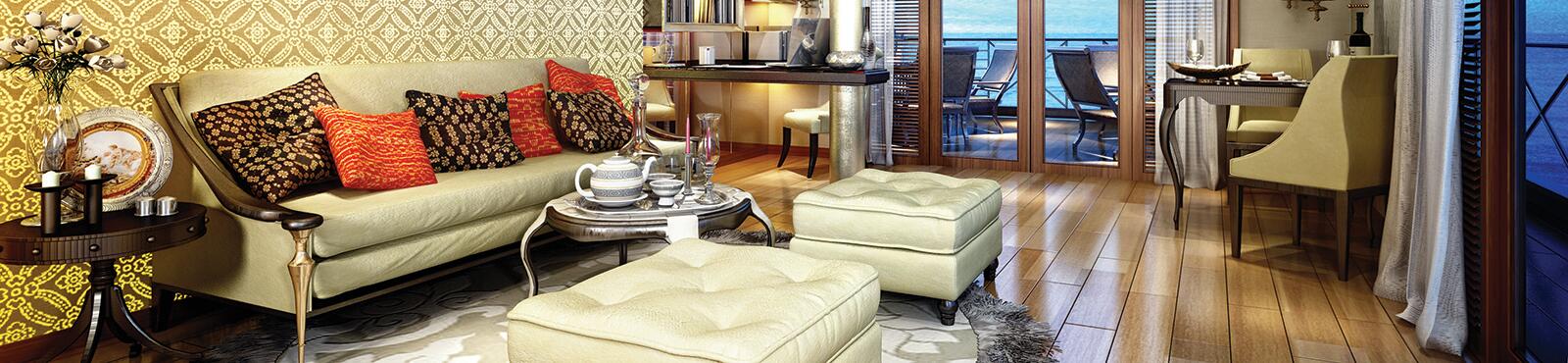
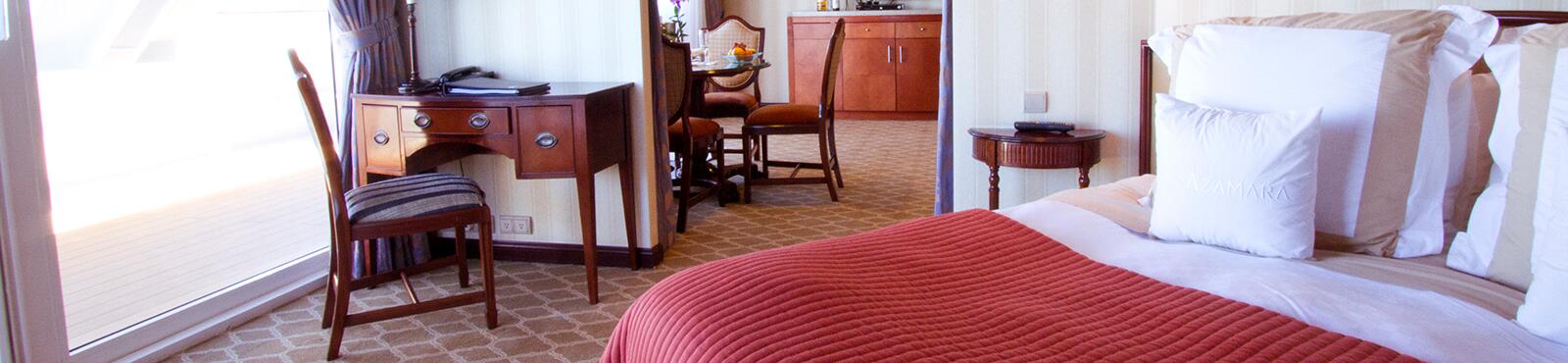
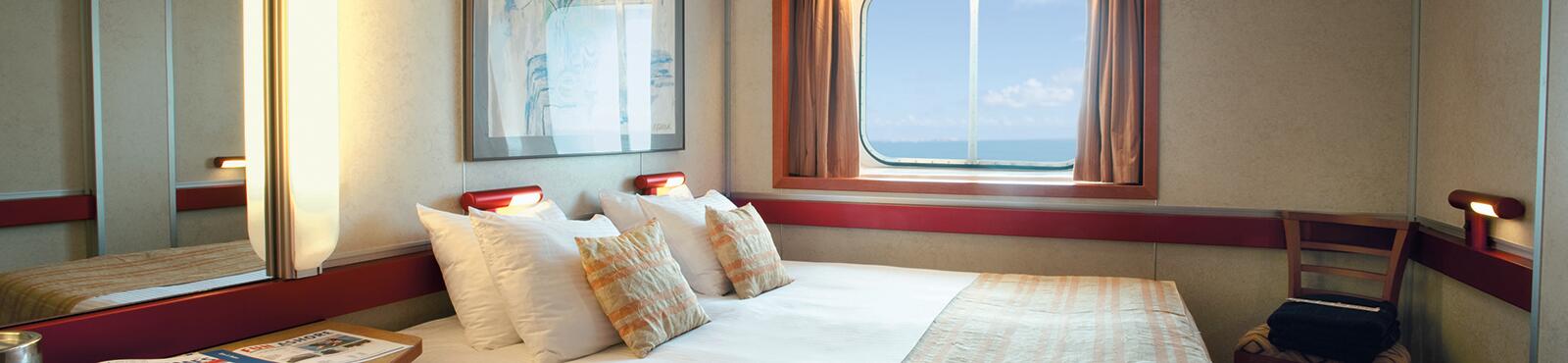
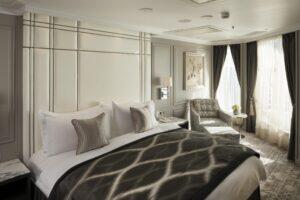
Royal Caribbean is known for small cabins, inside cabins are just about big enough to turn around in. Hats off to Royal Caribbean, though, for not skimping on balcony cabins. Actually, cabins are roomier than elsewhere in RCI's fleet. Inside cabins do measure a stingy 160 sq. ft; but outside cabins range from 180 to 265 sq. ft. and suites from 610 to 1188 sq. ft. Moreover, there's lots of storage, especially nice for a ship that essentially goes nowhere. Standard amenities include color TV with CNN and movies; a safe; individual temperature controls; and RCI's first hair dryers. There are tubs only in the highest category staterooms' bathrooms; most have just showers (though unexpectedly large ones) with medicine cabinets.

If you book an interior cabin, be aware that the cabins come with twin beds, one against each wall. If you attempt to put them together for a single king-size bed you will not have enough room to get around the corners of the bed.

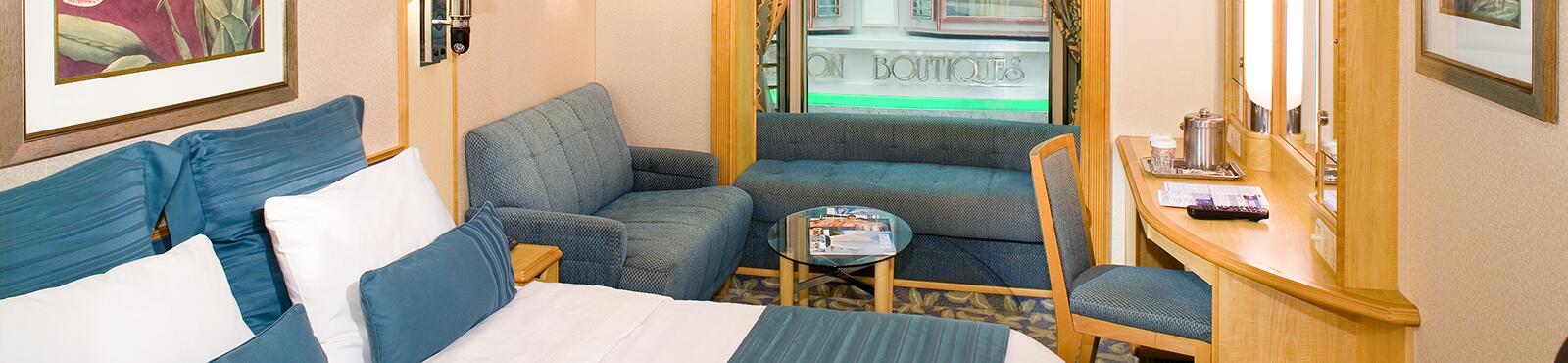
Some of the most interesting staterooms on these ships are the Inside Promenade cabins with windows (non-opening unfortunately), that look out over the interior Royal Promenade.

Fitness/Spa

The ship's well-equipped gym still draws serious fitness buffs with its full range of state-of-the-art machines. The two-level Steiner Spa, with its winding staircase, looks more like the lobby of a boutique hotel, albeit with a Greek motif. It houses a small attractive thalassotherapy-like pool in an airy glass-enclosed but private semi-circular room. The Solarium's serene outdoor pool area nestles behind the spa; you're surrounded there by fountains, foliage, and statues, with a retractable glass ceiling overhead.

Children's Facilities

Royal Caribbean has made a number of improvements to youth and teen programming. One new program is Adventure Theater, developed by Camp Broadway in New York City to give kids an immersion into the performing arts. On each RCI sailing, teens and kids can learn acting fundamentals, vocalization, and dance techniques during a series of three 45-minute Adventure Theater sessions.

Another innovative program is Scratch DJ101 classes, which are available to all ages, along with special two-hour sessions just for teens on Liberty of the Seas. After their lessons, teens can showcase their music mixing knowledge in a graduation performance that friends and family can attend.

RCI has added new activities for those three to five years old in conjunction with Fisher-Price. Some of the new themes include Chefs on Deck, which involves role playing for pre-schoolers; Dino Adventure; and Train-O-Mania.

Lastly, RCI unveiled a Youth Loyalty Program this summer. Children and teens can now also enjoy Crown & Anchor Society repeat passenger benefits. Rewards for youngsters on their second or more RCI cruise include Crayola Twistable crayons or a Royal Caribbean bag. All repeating youth receive a Youth Ultimate Value Booklet with coloring pages, games and discounts for onboard amenities such as Ben & Jerry's, Airbrush Tattoo, and arcade games. Parents can enroll their children (if they have already cruised with RCI) via the line's website: www.royalcaribbean.com/youth.

A new program for infants and toddlers 6 months to 3 years, in partnership with toy maker Fisher-Price, offers 45-minute playgroups for children accompanied by an adult, involving storytelling, creative arts, music and a variety of Fisher-Price learning toys and games.

Private babysitting is offered from 8:00 a.m. to 2:00 a.m., provided sitters are available, for children from one year old. The rate is usually between $8.00 and $10 per per hour depending on the number of children in the family. Cash payment is made directly to the sitter. Arrange through Guest Services at least 24 hours in advance.

Attire

There are two formal nights per cruise. Maybe it's this ship's particularly festive reputation that induced most men onboard our sailing to don actual tuxedos for formal nights. A dark suit is just as appropriate. In general, though, this ship offers so much to do onboard that passengers don't all dress alike.

User Reviews

49 User Reviews of Royal Caribbean Ships
Eastern Caribbean
Publication Date: December 23, 2012

Cruise with husband and two friends. The service in the diningroom was exellent, and every dining was a pleasant experience. Thanks to Gemma and Jesus. The shops onboard was a disappointment with mostly horrible service, espesially in the jewelshop where we were harassed by a saleswoman. I tried to buy some sunglasses in another shop, but the saleswoman was not very interested. I bought a pair on one of the islads instead. This made the experience of the cruise less memoriable for us. Do not think we would like to cruise again.

Read More
 
Transatlantic Crossing
Publication Date: April 15, 2012

This was my first cruise on a Royal Caribbean ship, and it exceeded my expectations in every respect: ship, crew, activities, dining, price, and ports of call. I will describe each of them in that order.

SHIP: The Adventure of the Seas was built in 2001, which makes it almost middle-aged by current cruise industry standards (seems young to me). It is well-maintained, and other than a few fogged windows (in the aft buffet) age is not an issue.

It is 137,000 tons (three times the volume of the Titanic but smaller than its newer sister ships), and carries 3,000 passengers and 1,000 crew. It is the largest cruise ship that I have traveled on so far.

I was afraid that the large size would create crowds and waiting lines, but that was never a problem. The ice skating rink (yes, ice rink) blocked through-traffic on decks two and three, and shoppers sometimes slowed traffic on the deck five mall, but the other decks never seemed crowded.

The large size of the ship allows for a greater variety of sports and entertainment venues than on smaller ships. I was surprised that I never had

to wait to participate in sports activities and always found a seat at entertainment (and enrichment) events.

The decor of the ship is stylish with a few whimsical touches. The stairwell art works are especially enjoyable. If you have a chance, take the free art tour given by a crew member several times during the cruise.

At about 153 sq. ft., my inside cabin was a bit smaller than I am used to, but it was well-designed and very functional. Only the CRT-type TV seemed dated. The climate control worked very well, and there always was enough fresh air at whatever temperature I wanted.

The bathroom was snug, but the shower had great water pressure and the circular enclosure worked much better than the usual shower curtain. I was pleased with my inside cabin. I did not have an opportunity to view other cabin categories and cannot comment on them.

For a look at the ship inside and out, a link to my photos is given at the end of this review. Photos of the ship are better than any description.

CREW: All of the crew members were well-trained and thoroughly professional, from the cruise director (Abel, a charming polyglot from Switzerland) to the numerous people who worked behind the scenes keeping everything shipshape.

I was impressed that the crew were very responsive to requests. When my shower backed up and later when my ceiling light flickered, the maintenance crew had each of them fixed within an hour. When I noted that the spa schedule was heavy on fee- and light on free-activities, the spa staff responded by adding a free stretch class every morning (try it, you will be amazed how enjoyable it is).

The entertainment crew also did a great job. The singers and dancers were very talented, and the ice skaters were world class. The activities crew made certain that guests felt welcome to participate in (or simply watch) the numerous events they offered. They were always very polite and friendly, which is not easy when one loses an hour of sleep almost every night on an eastbound itinerary.

My dining crew (I had open seating) were always first rate, and they always seemed to know my drink preferences even though I rotated tables and dined at various times.

My cabin steward Joel also did a fine job. My cabin was always immaculate, and he greeted me by name and helped me practice my Spanish (for my trip through southern Spain that followed the cruise).

PASSENGERS: Transatlantic cruises tend to attract an older and often better educated crowd with fewer children than shorter regional cruises, and that was the case on this cruise.

Since the passengers on this itinerary were about a quarter North American, a quarter Hispanic, a quarter German, and the remaining quarter other European and Asian, one had a chance to experience a broad variety of backgrounds, world views, and languages (although most passengers also spoke English). Meeting them was one of the pleasures of open dining.

Surprisingly few passengers smoked, and smoking was not an issue since it was limited to only a few areas. As on most ships, smoking was not allowed in the dining rooms and most other public areas.

ACTIVITIES: The ice rink was a surprising pleasure. The ice shows were infrequent but impressive, with the cast of ten skating at a world class level. This will be your best chance to see (up close and personal) how athletic an ice show really is. Obtain your free tickets the day you board, and go early since it is open seating.

The gym was adequate in size and equipment, but its open floor plan with a central whirlpool made it a bit noisy. Bring earplugs or headphones when you head for the gym. I carry earplugs to all cruise ship venues because of my personal bias against the muzak and over-amplified entertainment on almost all cruise lines, especially on the pool deck where one wants to relax.

The sports deck offered a wide variety of activities. The rock climbing wall on the back of the smokestack was much more fun than I had expected. Make sure you give it a try. It is exhilarating, and easier than you think.

On warm days the pool area was very busy, and as usual on cruise ships some people saved their deck chairs in advance, in spite of signs to the contrary. While it was warm in the Caribbean and western Atlantic, the eastern Atlantic was windy and very cool for April -- good for deck walks but not for sunning or swimming.

The jogging/walking track on the top deck was often busy and sometimes very windy, but the deck 4 promenade area under the lifeboats was more protected and never crowded. By climbing stairs up to deck 5 in the bow and then back down to deck 4 one could encircle the entire ship. The balcony "bulge" midship gives beautiful sea views on these walks.

The library had a relatively modest selection of books that often appeared to come from remaindered titles. You might want to bring some of your own reading material. The library had open shelves and was run on the honor system, which was convenient.

Enrichment lectures were relatively lightly attended for a transatlantic crossing, but the three speakers were all entertaining and enthusiastic. Most lectures related to the next port of call or to our final destination (Spain), which was a plus.

Some passengers were disappointed in the speed of the internet connection while mid-ocean (especially since it is billed per minute), but I did not have a problem since I only used it when we were in or near a port (public libraries in ports often have free internet, just ask locally). Wi-fi users seemed to like the outdoor tiled alcove near the solarium pool for a good connection.

CROWN AND ANCHOR: A nice perk of my diamond Crown and Anchor status on RCI (based on reciprocity with my Captain's Club status on Celebrity) was 20 minutes of free internet usage.

When you book a cruise with RCI and join their Crown and Anchor frequent-cruiser program, ask them to check your Celebrity account too, to see if you already qualify for RCI elite status.

In addition to the internet credit, I received a free 8x10 photo of myself (the professional photographers were very good, and very polite), and I received coupons for reduced prices in several venues including laundry service.

Perhaps the nicest perk was a daily pre-dinner cocktail hour in the Imperial Lounge with free wine and soda for diamond and higher Crown and Anchor categories.

DINING: Dining preferences are subjective, but the following suggestions may be useful to you.

The breakfast and lunch buffets (in the Windjammer) had both steam table and cold offerings. On every cruise line the former tend to be over-cooked, and so I tend to opt for the latter. The fresh fruit and crisp bacon at breakfast were excellent, and a wide variety of salads was available at lunch (although the main dining room salad bar was even better on sea days).

Remember that the hand gels at the buffet entry are good for bacteria, but hand washing with soap and water is even better for viruses like the notorious Norovirus.

It is just as important to wash your hands after using serving tongs as it is before entering the buffet. A nice bonus to hand washing is the beautiful view from the restrooms near the buffet entrance (they each have a glass wall overlooking the sea).

All but one of the twenty meals I had in the main dining room, both lunches and dinners, exceeded my expectations (a great record, I think). The menu is not quite as inventive and the presentation is not quite as elegant as on premium or luxury cruise ships, but I did not expect it to be. However, the quality of the ingredients and their preparation were always first rate.

At lunch on sea days, when the main dining room is open, you must try the chef's salad bar. It is the best I have had anywhere, on land or sea. Just make sure that your serving person is not too generous with the salad dressing. Main courses and desserts are offered in addition to the salad bar, but the salads are so large that you may not want anything more.

At dinner the beef was always top quality prime rib or tenderloin (I did not try the off-menu sirloin and cannot evaluate it). Only once was the prime rib well done, rather than the rare that I ordered. At my request they even grilled the filet mignon extra rare, which few ship galleys are willing to do.

The seafood (various white fish, shrimp, scallops) was always cooked to perfection, and except for the off-menu salmon, the seafood was never dry or overdone. The seafood was so good that I often ordered it.

There was no rack of lamb, but the lamb shank was tender and flavorful. There was a variety of poultry and pork, which I did not sample since I have that often enough at home.

I had a dinner salad (the Caesar) only once, and it had wilted under its dressing. At dinner it may be best to order salad with the dressing on the side. I did not try the soups, although my tablemates enjoyed them.

Desserts at dinner and during the afternoon in the buffet were usually American style, with an emphasis on cakes, puddings, pies, and ice cream. Classic French desserts were less frequent, and chocolate desserts were not as flavorful as one would like.

I opted for My Time (open) dining with pre-paid gratuities. I had multiple different servers and assistants, and all were excellent. Unfortunately there is currently no system to reward them with additional tips unless you hand each one a cash supplement at the end of the cruise. I hope some day RCI will be able to computerize this process from one's shipboard account, since it may involve a dozen different servers.

I experienced three minor disappointments with My Time dining:

First, some passengers reserved the same (usually small) table at the same time for almost every night of the cruise, essentially locking out others who might also want a table for two or six. The rest of us usually were seated at long tables for ten, which made both conversation and service difficult. To be fair to all passengers, My Time dining should not be My Table dining.

Second, the servers were so generous that they often brought unordered cheese and fruit plates before presenting the menus. On one occasion a couple at my table (perhaps they had previously complained about something) even received two huge Greek salads, a platter of bruschetta, a cheese plate, and a plate of petits fours before they placed their orders. This generosity is done with the best of intentions, but extra food should be on a request only basis.

Third, rather than seating guests in their order of arrival, my tables for ten were sometimes partly filled, service commenced, and then the remainder of the table was filled 15-20 minutes later. This staggered seating is difficult for both the servers and the earlier guests, who usually must delay their remaining courses until the later guests catch up. Open dining works better when a table is closed to new guests once the first course is served.

PRICE: The good news is that this eastbound transatlantic cruise was the best value I have encountered in more than 20 years of cruising. The bad news is that cruise prices are capacity controlled, and you might not be able to obtain such a good price for your own transatlantic cruise.

Several months before this cruise, I crossed the Atlantic westbound on a Celebrity ship. When I wanted to return eastbound on the same ship, the price was raised $400 for residents of my state (but not for residents of about 20 other states). Although I could afford the increase, the geographic discrimination turned me off.

Instead I found this RCI cruise online. It was just as long as, but cost half as much as, my prior Celebrity cruise (excluding gratuities and port charges, which are fixed). Even better, I was able to obtain a solo cabin for only a small surcharge (most cruise lines charge solo travelers 200%, and sometimes even 300-400% of their standard rate for couples).

My per diem as a solo passenger in an inside double cabin on this cruise was an astoundingly low 48 USD, before standard gratuities and port charges. Thank you RCI!

However, when I considered extending my cruise on the same ship in the Mediterranean, a solo cabin for the extra one week would have cost more than four times the rate offered to couples, and more than twice what I paid for the prior two week transatlantic cruise.

Also, when I considered taking the same transatlantic itinerary westbound on the same Adventure of the Seas next fall, a solo cabin would have cost three times the rate I paid for my cruise eastbound. Go figure.

The lesson is that there is sometimes no apparent rhyme or reason to cruise fares. One must simply stay alert and watch for good values on the internet.

I hope that RCI has another good value in the future, because I would happily cruise with them again when their solo cabin price is a good value.

(N.B. Shortly after I wrote the above, I booked back to back Alaska cruises for June on the RCI Radiance of the Seas -- not the fantastic bargain that my transatlantic cruise had been, but a good value compared with all the other solo cabins on cruise lines in Alaska.)

PORTS OF CALL: I rarely book a tour in any port of call. I much prefer to explore ports on my own, taking cheap public transportation and meeting locals along the way. The following information may help you to do the same on this itinerary.

First, my photo links are given here and again at the end of this cruise review. You will be surprised how attractive these ports are.

Click on this link (or copy and paste it in your browser if necessary):

https://picasaweb.google.com/efschlenk/TACruise412Album?authkey=Gv1sRgCNOnrerv9O-wUA#

Thumbnail photos will then appear (if you get a "stack overload" alert due to the number of photos, just click on the alert till it closes). Then click on the "slideshow" option in the upper left. Wiggle your mouse to access the control panel to set speed, pause, or go back.

SAN JUAN, PUERTO RICO: Our cruise began in San Juan.

San Juan hotels are overpriced, especially near cruise departure days, so I stayed in a basic and inexpensive (less than the cab fare from the airport) posada in old San Juan (Posada San Francisco, on Plaza Colon). There I met several others going on my cruise, and we shared a taxi to the RCI cruise terminal in the morning.

Old San Juan is a pleasure for strolling. Make sure you leave enough time to enjoy it, especially the two historic forts run by the National Park Service (El Morro and San Cristobal). For free entry to both, remember to bring your national park pass (Golden Eagle, etc.) from home.

The RCI cruise terminal is across the bay from old San Juan. There is no bus service nearby and you will need to hire a taxi to get there. Taxis from the airport to old San Juan are regulated and cost about $24 (for the entire cab), but taxis from old San Juan to the cruise terminal may take some negotiating (always agree on the price in advance, since most taxis are not metered).

Boarding begins around noon. Getting there earlier means you will simply have to wait in line (outside) longer.

ST. THOMAS, USVI: I regret to say that this is my least favorite port in the Caribbean. It is usually overwhelmed with cruise ships, even though the locals try very hard to accommodate them.

In years past we used to take the small ferry to Water Island to escape the cruise crowds (this is most convenient if your ship docks at the yacht harbor in Crown Bay). Unfortunately, local tour operators now bring party barges and catamarans into the Water Island beach every mid-day, so it is no longer quiet or pleasant.

Magens Bay beach is probably the best alternative (pay for a taxi to the north shore, then pay for beach entry). We may simply stay onboard and enjoy the empty ship when our itineraries take us to St. Thomas in the future.

ST. MAARTEN/ST. MARTIN (DUTCH/FRENCH): I am a francophile and a francophone, but I must admit that the Dutch half of this island (where the cruise ships dock) is much nicer than the French side. The French beaches (including the famous but unpleasant Orient Beach) are on the windward side, with rough surf, no free shade, and seaweed and plastic debris in the water and on the beach.

A much better alternative is to walk from the ship into Phillipsburg along the nice pedestrian walkway. A few blocks inland from the town waterfront you will find mini-vans heading west to Mullet Bay Beach (a scenic 20 minute ride for 2 USD). Look for the Mullet Bay sign in the mini-van window, and remember to greet the driver and other passengers when you enter. The driver will drop you a short walk from the beach.

Along the way you will pass the infamous Maho Beach, where jets land and take off just overhead. This is an awesome event, especially the late morning arrival of the KLM 747 from Europe (check flight schedules if you are interested in being blasted by awesome jet noise).

Mullet Bay Beach is far enough beyond Maho Beach that it is not bothered by the jets. It offers a long strip of pristine white sand and crystal clear water straight out of a travel poster. On week day mornings it is almost empty and absolutely glorious. There is shade, but no changing room, so wear your suit if you do not want to change under your towel. Vendors there rent chairs and umbrellas, and they sell snacks and drinks.

SANTA CRUZ, TENERIFE, CANARY ISLANDS (SPANISH): The first of the two Canary Islands on our cruise, Tenerife Island is well-developed and tourist friendly. Most of its tourists arrive by air from Europe. Most of the beaches are on the south coast, but the best sightseeing is to the north and west of the Santa Cruz cruise port.

There was a good deal of construction along the Santa Cruz waterfront (it is being upgraded), but signs will direct you along a 10 minute walk to the main waterfront boulevard, where you can catch a local bus (you will need a few euros for buses, drivers make change) westbound to the large main bus station ("Estacion" on the front of the bus, or ask the driver).

From there, you can catch a bus (there are several per hour, I believe #15) to La Laguna, an inland town about 20 minutes northwest, with a UNESCO World Heritage preserved historic center. Old La Laguna is wonderful for strolling and is just a 10 minute walk from the local bus station (or take the modern tram those few blocks). The local tourism board in the center provides free guided walks on most days around noon.

There is an old tower in the town center with nice views (it does not open till 10am), and there is a nice farmers and florists market a few blocks northeast of the old town.

Remember that clean and free public restrooms are available in the La Laguna bus station and in the farmers market building.

If you have time and interest, there are frequent buses from La Laguna to Puerto de la Cruz on the northwest coast, an additional 20 minute ride on the freeway. This is an attractive tourist enclave with a nice parks and a waterfront walk. The local tourism board has good maps for self-guided walking tours, and their historic office on the waterfront has a nice gift shop with local crafts, including handmade lace.

There is no bus station building in Puerto de la Cruz. Instead the buses all line up along one street located a few blocks above the waterfront, with street signs giving the destinations and schedules. There are frequent buses back to Santa Cruz, about a 30 minute ride on the non-stop (I believe #103) bus.

With your remaining time in Santa Cruz (the cruise port) I suggest you walk around the Calatrava-designed Auditorium of Tenerife, which is near the main bus station. It is similar to his famously winged Milwaukee art museum in the U.S.A. Make sure you look at the painted rocks along the waterfront near the auditorium. The portraits will surprise you. See how many you can recognize.

From the auditorium it is a 15 minute walk back toward the center of town to the modern TEA public library and contemporary art museum. The former is the most beautiful library I have seen anywhere (and it has free internet). The latter has temporary exhibitions, some of which are very enjoyable if you are an art lover, and are relatively inexpensive. There is a coffee shop between the library and museum, with a separate entry.

Next door to the TEA is the anthropology and natural history museum, which some recommended but I did not have time to see. From there it is a 20 minute walk back to the ship.

There is usually a shuttle from the ship to the town center for a few USD, but it was not operating early enough for me, and the public bus stop is close to the ship anyway. You will be surprised how enjoyable Tenerife and La Laguna can be.

ARRECIFE, LANZAROTE, CANARY ISLANDS (SPANISH):

Lanzarote Island is famous for its barren volcanic landscape, which has been used in some science fiction movies as an alien planet. Incongruously, one of the most popular ship tours is a camel ride in the remote volcanic national park. There are also many things you can do on your own at a fraction of the cost.

Cruise ships dock about 2 miles (3 km) east of Arrecife town. There is a small beach at the port (too cold to swim, but adequate for sunning on a warm day). Just follow the pedestrian walkway signs. One can continue on foot to Arrecife, but it is too far and uninteresting to be worthwhile.

Instead of the walkway to Arrecife, walk 10 minutes straight out of the cruise port to the main highway (follow the trucks and buses, and use caution because there is no sidewalk toward the end). On the highway traffic circle is the Estrella restaurant.

On the side of the highway next to the Estrella restaurant you can flag the local bus (I believe #3) eastbound to Costa Teguise. It departs every 20 minutes, takes about 15 minutes, and costs about 1.50 euros (drivers make change). At the end of the line, there is a condo area with shops and several pleasant beaches (walk through the mall to get to the beach promenade).

Alternately, across the highway from the Estrella restaurant is the westbound bus (I believe #3) into Arrecife (10 minutes, about 1.50 euros) and beyond to Playa del Carmen on the south coast (about 30 minutes more, although I did not go there).

Instead, I changed buses in Arrecife (at the main bus station inland or at the large outdoor Intercambiador bus stop near the waterfront) and took the #60 bus for a 60 minute long, 4 euro ride along the center of the island past the volcanic national park (no access by public bus) to Playa Blanca on the west coast.

This route gives a scenic view of most of the island, and the beach walk at Playa Blanca is very pleasant. The #60 bus runs only once every hour (near the top of the hour) so plan your return to the ship accordingly.

FUNCHAL, MADEIRA ISLAND (PORTUGUESE): Madeira Island has a local bus system, but most of it is thinly scheduled, for locals going to and from work.

However, there is good bus service (#20 or #21, I believe) up the mountain behind Funchal to the beautiful vistas and street sled rides of El Monte.

Funchal itself is a beautiful town with wonderful gardens. A ride up and down from El Monte followed by a walk through Funchal with visits to the farmers market and several churches and museums will easily fill your day.

At the cruise port pick up a free map of Funchal. From the cruise ship it is a scenic 15 minute walk along the yacht harbor and waterfront to the Praca de Autonomia (Plaza of Autonomy).

On the west side of the plaza, heading uphill along the (usually dry) riverbed is the bus stop for El Monte. It is a scenic 15 minute ride up (about 2 euros) to the church (igreja) of El Monte (ask the driver where to get off). From the church front you can look down over Funchal and the cruise port.

Right below the church is the starting point for the famous street (basket) sled rides part way downhill. The bus ride back down was thrilling enough for me, but just watching the sleds take off is fun. Near the church is a large public garden, but the entry is 10 euros, and the gardens in town are free.

On the east side of the Praca de Autonomia downtown is the indoor farmers, fishmen, and florists market. There you will find colorful photo ops, especially since the florists still wear the island's traditional red costumes and caps.

Walking along the pedestrian zone west from the market and the Praca de Autonomia you will come to the historic town center along Avenida Arriaga. There you will find many cafes, free wi-fi, beautiful blue (in spring) jacaranda trees, and a wonderful public flower garden.

If you head uphill from that flower garden, you will come to Santa Clara street, which leads up to two fine museums, a beautiful church (San Pedro) and a nice old convent (Santa Clara).

Near the top of the street is the Museu Quinta das Cruzes, a fine old mansion where the last Austrian emperor was exiled after the war. It is now a museum of decorative arts. In the museum garden is a nice orchid display.

A few blocks below this, also on Santa Clara street is the Museu Freitas. Half is a modern building with a good collection of the famous old tiles (azulejos) which one sees in churches and homes. The other half is the former mansion of Dr. Freitas. The mansion is particularly impressive because its valuable art objects are in situ, and not behind glass.

To see the Santa Clara convent you will have to ring the bell next to the gate. If it is answered, a nun (or employee) will include you in one of their tours. San Pedro church is near the convent on your way back down to the town center.

For those who are unable to walk well, I believe Funchal has a hop on/off bus tour that leaves from the waterfront, but I do not know the schedule or prices.

MALAGA, SPAIN: Malaga was founded by Phoenicians, then settled by Romans. It is surprisingly attractive and enjoyable for a day visit (or preferably an overnight), and the local tourist offices are friendly and helpful.

Torremolinos is a short bus ride west of Malaga, and Nerja (less crowded and more attractive than Torremolinos) is a 50 minute bus ride east. Buses to either leave from the bus stop on Avenida Herredia near the waterfront, which is closer to the town center than the main bus station.

Cruise ships dock about a mile (1.5 km) from the historic center of Malaga and about two miles (3.0 km) from the back-to-back train and bus stations. The airport is several miles west of town, but there are good airport buses every 25 minutes (2 euros) leaving from Alameda Principal, the short boulevard with florist booths located between the waterfront and the old town center.

On arrival in Malaga at the end of my cruise I walked off the ship at 0630 and took a taxi (they are all small, white, and metered) from the ship to the bus station (about 10 euros plus tip) for my bus ride to Ronda. I was at the bus station before 0700 and was glad to have taken the taxi since it started to rain a few minutes later.

I stayed in Malaga for two nights (at the small, central, and very reasonable Hotel Trebol) after spending two weeks traveling on my own through Andalusia (Ronda, Sevilla, Cordoba, and Granada).

From Malaga I then took an inexpensive Veuling (Iberia code share) flight to Barcelona, where I stayed a few more days before flying back to the U.S.A.

In addition to a side trip to Nerja, I enjoyed Malaga's Picasso Museum (Malaga was his birthplace) in a restored mansion with a pleasant garden cafe. While the Barcelona Picasso Museum has mainly early (adolescent) and late (Las Meninas cycle) works, the Malaga Picasso Museum has works from his middle years that he kept for himself and are now on loan from his family.

Near the Picasso Museum is Malaga's large cathedral (with a small but free art museum in the adjacent historic Episcopal Palace), and also nearby is Malaga's open Roman amphitheater.

The entire downtown area is a stylish pedestrian zone with nice shops and cafes, which are especially enjoyable for people watching during the evening paseo.

West of the town center is a photogenic indoor farmers market (a block from my Hotel Trebol), and north of that is a small but enjoyable costume and decorative arts museum

All of these sights are listed on the free tourist maps, which are available from tourist information booths near the waterfront, the cathedral, the Picasso Museum, and the amphitheater.

Like Cartagena farther up Spain's Mediterranean coast, Malaga is much nicer than one expects. Malaga is a very enjoyable place to start or end a cruise.

Again, for those interested, my photos of the ship and some of the ports are at the following link. Click on this link (or copy and paste it in your browser if necessary): https://picasaweb.google.com/efschlenk/TACruise412Album?authkey=Gv1sRgCNOnrerv9O-wUA#

Thumbnail photos will then appear (if you get a "stack overload" alert due to the number of photos, just click on the alert till it closes). Then click on the "slideshow" option in the upper left. Wiggle your mouse to access the control panel to set speed, pause, or go back.

I hope you find the above information useful. Enjoy my photos and your next cruise. Bon voyage!

Expand Review
Read More
 
Southern Caribbean
Publication Date: January 8, 2012

GENERAL INFO:

Please read through to the bottom where I have posted the "politically incorrect" comments about cruises departing from San Juan.

We arrived in San Juan 3 days before so we could tour El Yunque national forest and Old San Juan. San Juan has dozens of hotel choices ranging by price. If you check Expedia.com they provide a list of hotels and give you the ability to sort the list by price or by traveler opinion. The latter is the way to go and you'll notice that Hampton Inn is consistently listed in the top 5, and its worth it. The choice of hotel really comes down to life style: some want more from a hotel and some accept less for lower price. Just remember that choosing a hotel is like paying taxes in the United States: you get what you pay for.

From the airport you can take a cab at a defined rate by zones, just ask the driver what it will cost, and also be aware it is posted at the airport by the baggage claim. From your hotel the next morning you can again hail a cab

and pay a defined price to the pier. You can ask the front desk for info on cabs and typically cabs hang out at hotels for morning travelers.

RCCL TRANSFERS:

Trust me on this one and learn from someone who has been burned in the past. Do not, and I mean DO NOT, and I'm saying you ABSOLUTELY DO NOT take the RCCL transfers and here's why:

1) They pay a local cartage company to transfer your bags FROM the airport TO the pier. Problem 1: Bags are often pilfered due to the locks being cut off. This violates your privacy and trust in them. Cruise lines do nothing to stop this so its YOUR problem, not theirs. Problem 2: Bags arrive at the pier whenever the cartage company truck arrives. On a prior cruise we bought the cruise company transfer and arrived at the pier just before 6:00 PM but our bags didn't arrive at our cabin until nearly midnight. Until they arrived we presumed them to be lost and sought help from the cruise line who gave us a small pouch with a tooth brush, past, and comb: big deal. The bags arrived with locks cut off and contents rifled.

2) RCCL hires local buses to transport you to the pier. The problem is they decide to fill the bus and that means waiting around for passengers to arrive, which can take an hour or more and that delays your transfer to the pier and boarding time. Several years ago on a Celebrity cruise we got off the airplane at 4:00 and didn't make it to the pier until 6:00 PM. After checking in we were late for our 6:00 dinner seating and denied access to the main dining room - because the bus had to fill every seat before departing the airport.

You'll probably spend less on cabs to/from the airport/pier than the RCCL transfers, and you'll arrive when YOU want, not when THEY want you to, and with your bags intact. The lesson is to handle bags yourself to insure their safety and your convenience.

ONLINE CHECKIN;

We used Royal Caribbean's online check-in and this is a must because it saves a great deal of time at the pier. Either you fill out personal information (name, address, phone, various data) online yourself or they do it at the pier, which will take at least half an hour. When you arrive at the pier all they need from you at that point is your signed "Set Sail" agreement where you basically agree to pay your ship account, and a swipe of your credit card.

EMBARKATION:

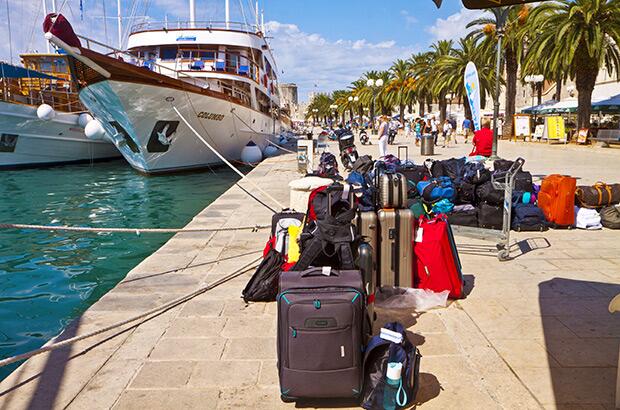
In general the earlier you arrive at the pier the better off you are going to be. If you arrive in morning you will likely have to wait as passengers are still disembarking and RCCL will delay entry. But the line is short that early in the day. Unfortunately, you are going to have to take some initiative and ask about the lines into the terminal. There were 2 lines: the line to the RIGHT was to drop off bags to be handled by RCCL. Meanwhile the line to the LEFT goes into the terminal and first through security. Note that large bags cannot go through their xray machines and must be handled by RCCL. You should hand carry (roll) all other bags to insure their safety and timely arrival on the ship. This insures you'll at least have something.

Cruises start on day "one" which obviously is your first day. But if you arrive at the ship at 6:00 PM you don't have a very long "day one" so the goal would be to arrive as soon as RCCL will allow you to board the ship, which is around 12:00 noon on day one.

THE SHIP:

Adventure of the Seas is huge. OK, its not in the Oasis class (new ship) but its still huge with lots of features. It's been very tastefully decorated, far more so than Carnival ships, which tend to be gaudy & overbearing. You can find images on the RCCL website. The Royal Promenade is a great place to hang out having shops, bars, and a cafe with pizza & deserts (included in your cruise price). On this cruise we began to notice the ship is getting a bit tired and needs a few weeks in drydock to recondition rails, replace carpets, etc. But its still a great ship.

CABIN CHOICE:

Most likely you already know the differences between inside cabin, outside with window, outside with balcony, etc. But what you may not know is you are vastly better off with a room towards either bow or stern. Rooms mid ship tend to be burdened by lots of traffic. People pass by those rooms at night, drunk, and conduct themselves like noisy recalcitrant children. But when they get near THEIR cabin they quiet down and behave like an adult (you hope). Midship, having lots of traffic by fact of location, offers little protection from jerks. We chose a room aft for less traffic. Unfortunately there can be misbehaving inconsiderate jerks in any section.

CHEAP ROOMS:

In case you are not aware of this cruise lines offer rooms VERY cheap at the last minute to keep cabins full. Be aware that cruise ships have relatively fixed costs (crew, food, etc) which doesn't change from week to week. Because of this the cruise industry maintains a business plan to fill rooms at almost literally any price and after that they can then make their profit on excursions, booze, and gambling. HOWEVER - keep in mind this is usually only possible for locals, which in the case of Puerto Rico led to noisy, unruly, barbarians (more on this at the end). You ALWAYS want to carefully consider the departure port for this reason.

DINING:

Food is very good and most people typically eat lunch and breakfast at Windjammers on deck 11. Some choose the dining room instead. Breakfast at Windjammers tends to have some of the same items every day, but with many choices it shouldn't matter because you can't eat everything. Lunch tends to be similar also but they do vary some of the meats, fish, and sides. The deserts change daily and are very good.

The main dining room, which is 3 floors high with each having their own name, is excellent. For us service was very good and the food was great. Waiters work for tips so they highly motivated to please you.

DINING ROOM DRESS:

This is one major flaw in cruises and not due to the Royal Caribbean but rather very lax social standards. Many people don't understand the etiquette of dressing for dinner on cruises.

There are 2 formal nights in which the majority of people actually dress formally. If you are the kind of person who refuses to dress up then I suggest having dinner at Windjammers Cafe on deck 11. Also, if you cannot get to dinner on time you should have dinner at Windjammers Cafe. It's informal and buffet style. When people refuse to dress properly in the dining room they disrespect their fellow passengers. When they refuse to arrive on time they disrespect the dining room staff and make life very difficult for them. If you need a reason why its because waiters typically have 3-4 tables they serve and it works much better if all tables are on the same schedule, which is to say serving starters at all tables, serving main courses at all tables, and not breaking up the rhythm due to diners coming in late, forcing wait staff off their schedule. This affects service at tables where guests did arrive on time.

BEDS:

Other reviewers talk about how bad the beds are and if they are talking about the edge of the bed they are right. But what people forget is the cardinal rule of beds - which is you DO NOT sit on the edge of the bed. In addition you don't sleep on the edge. The beds are large and though the mattress is a bit thin it's not bad in the middle. My wife and I had plenty of room. Unfortunately the mattress was past its prime and I noticed some room attendant had stuffed a bag full of towels or sheets under the bed in the middle to keep it from sagging, another reason the ship is due for maintenance. Still it was adequate (not good but acceptable).

ALCOHOL:

RCCL is pretty chintzy about this and want to make sure you ONLY buy THEIR liquor at their inflated prices.

In ports of call, for the purpose of confiscating liquor under a guise of "security", they x-ray your bags so you are not going to sneak on liquor. If you purchase liquor they WILL confiscate it from you and it they return your liquor to you on the last night of the cruise.

PORTS OF CALL & EXCURSIONS:

Renting a car VERSUS excursions:

It certainly is cheaper to rent a car than go on an island excursion, and this is true for any island. However, you have to consider that first you are driving in the 3rd world and if you are American you take for granted the roads you drive on. If you drive a highway in America there's likely local police who will offer assistance if you pull over with a problem. It is rare to find police on roads in 3rd world countries.

On the other hand if you can manage the roads the advantage of a car rental is you can come and go as you please. And it will cost less. But note that all Caribbean islands heavily push "collision damage waiver" which limits the amount you are responsible for. And worse some require a "deposit" which is island speak meaning a promissory note to pay $500-1000 in case of an accident claim. We purchased an insurance policy through CSA Travel Insurance over the Internet that covered the trip INCLUDING cruise, air, and the collision damage waiver so don't take their coverage - it stinks and is just another way to get money out of you.

St Thomas:

Rented a car from Budget Car rental at Havensight Pier, very convenient. HOWEVER, the map provided was virtually worthless and its only purpose was to show where restaurants were, which we didn't use. We parked the car at the pier during lunch time and went back out and drove. Driving is on the left side of road. Avis is across from Havensight pier and had a better map on a prior visit to the island. For that reason I suggest Avis because driving without a map is a waste of time and money.

St. Kitts:

A very pretty island which has some interesting attractions such has Romney Manor and Brimstone Hill Fortress. Rented a car which actually worked out well, driving is on the LEFT with steering on the RIGHT. Note they require a $24 local license.

Aruba:

Did an offroad excursion through Port Promotions (find them on the Internet) for $84 each which included lunch, it was OK. Interesting sites that could not be seen without an offroad vehicle. Aruba is essentially one big rock.

Curacao:

Nice little town with a Dutch harbor. The bridge moves back and forth for ships passing through in which case it closes. Town has all the usual tourist trap stores.

In general there are tons of excursions offered by Royal Caribbean, but what's not generally known is there are other companies providing excursions. One such and previously mentioned is Port Promotions who we used in the past. They have any number of excursions on many Caribbean islands and are comparable to those provided by the vendors selected by RCCL, and may cost less. BUT - if you choose them you MUST keep track of the time returning to the ship and let your guide know. DO NOT expect them to keep track of ship departure time because they won't. You DO NOT want to arrive late for the ship since it may not still be in port.

ENTERTAINMENT:

This is pretty subjective and depends upon your personal taste so that must be up front. The ice show is fabulous and not to miss and consists of various Olympic skaters from around the world. Get your tickets as soon as they are offered because they go fast. There typically is a musical shows that is 'Broadway' and/or Las Vegas quality. Around the ship there are various other musicians and usually pretty good.

ART AUCTIONS:

Auctions are held on most cruises lines and on most ships. I've sailed Royal Caribbean, Celebrity, and Carnival, and Park West Galleries was on all of them. Royal Caribbean has now established their own inhouse auction vendor due to a particularly checkered history of Park West Galleries which is a lightning rod for complaints. Just check any cruise review website and you'll see what I mean.

DISEMBARKATION:

People leave the ship in groups and you are provided with a group number, which they call for disembarkation. RCCL wants you off the ship as quickly as possible so expect a knock at your door by 7:00 AM. This cruise required us to go through customs which took more time than without a customs inspection.

OVERALL CONCLUSION:

On this cruise we had a great deal of problems with obnoxious people, and because America's economy is so bad Americans are not sailing. As talked about earlier the cruise industry works on the business model of filling rooms at whatever price needed to get people on board and make money on excursions, booze, and gambling. The problem with that is you get locals who are NOT the classiest people and often are poorly behaved, which sadly was the case on this cruise.

PUERTO RICAN LOCALS:

In the past there has been a limited number of Puerto Rican passengers and typically well behaved and respectful of other passengers. This time was entirely different and it got downright ugly with half or more of passengers being Puerto Rican, it was easy to see a cultural gap that created real problems. This time we noticed they moved in squad and platoon sized groups that made people feel very uncomfortable overwhelming people nearby, and they were completely inconsiderate of others and quite rude like they didn't know how to act in public. Here are some of the problems encountered:

* They played drums and sang loudly in public areas without concern for others (I'm not making this up). * Teenagers were typically unsupervised by parents and unruly. * Many sat on and stood around stairwells blocking them. * Walked into elevators without letting people off first and you were shoved in by a large group who insisted they all get on the elevator. * Very loud in hallways at night, often yelling. * Came into the dining room late, often one hour or more late, disrupting wait staff flow. * Low local fares attracted really lower class people without manners and any concept of how to behave within society. * During disembarkation notice one man repeatedly spoke very loudly of "Gringos" while waiting in line so that Americans could hear him. This was intentional and designed to goad us.

At this point we likely will NOT sail out of San Juan until such time as America's economy improves and cabins are filled with Americans and Europeans. After what Europeans experienced I don't think they'd want to sail out of San Juan again.

Expand Review
Read More